
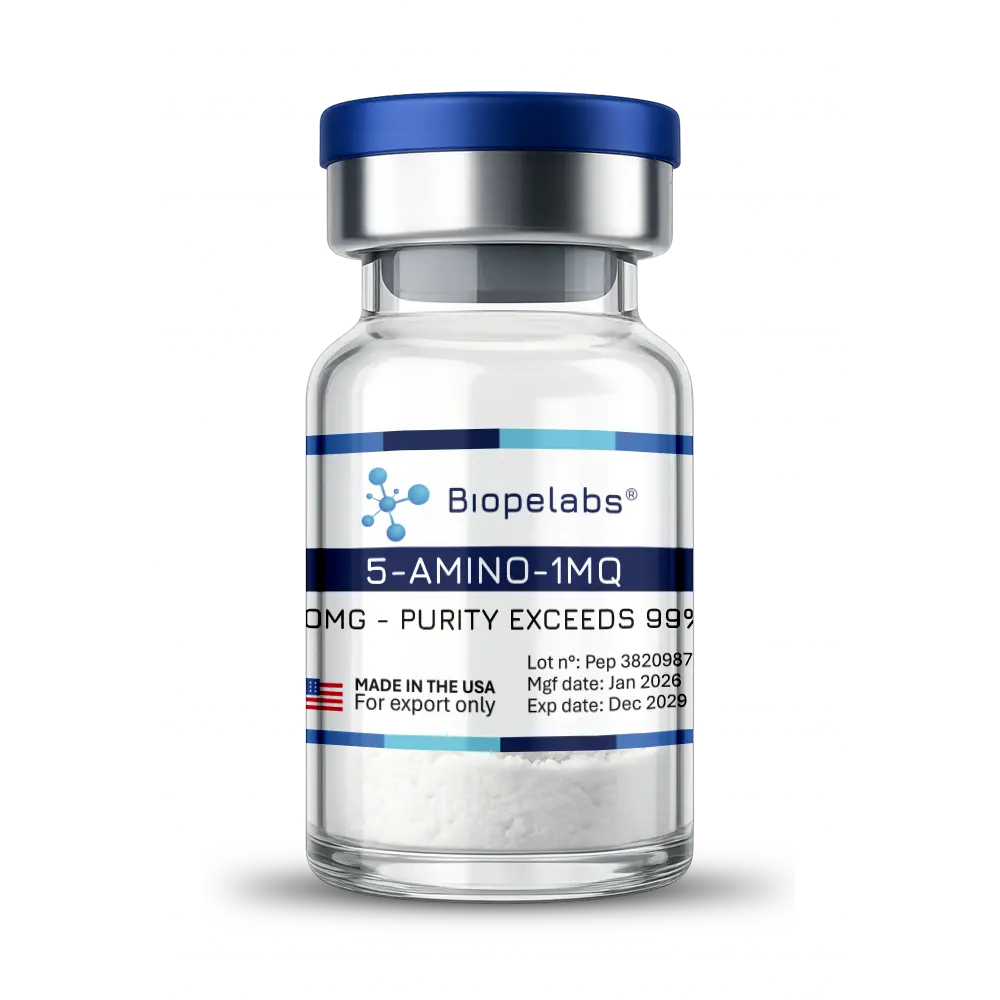
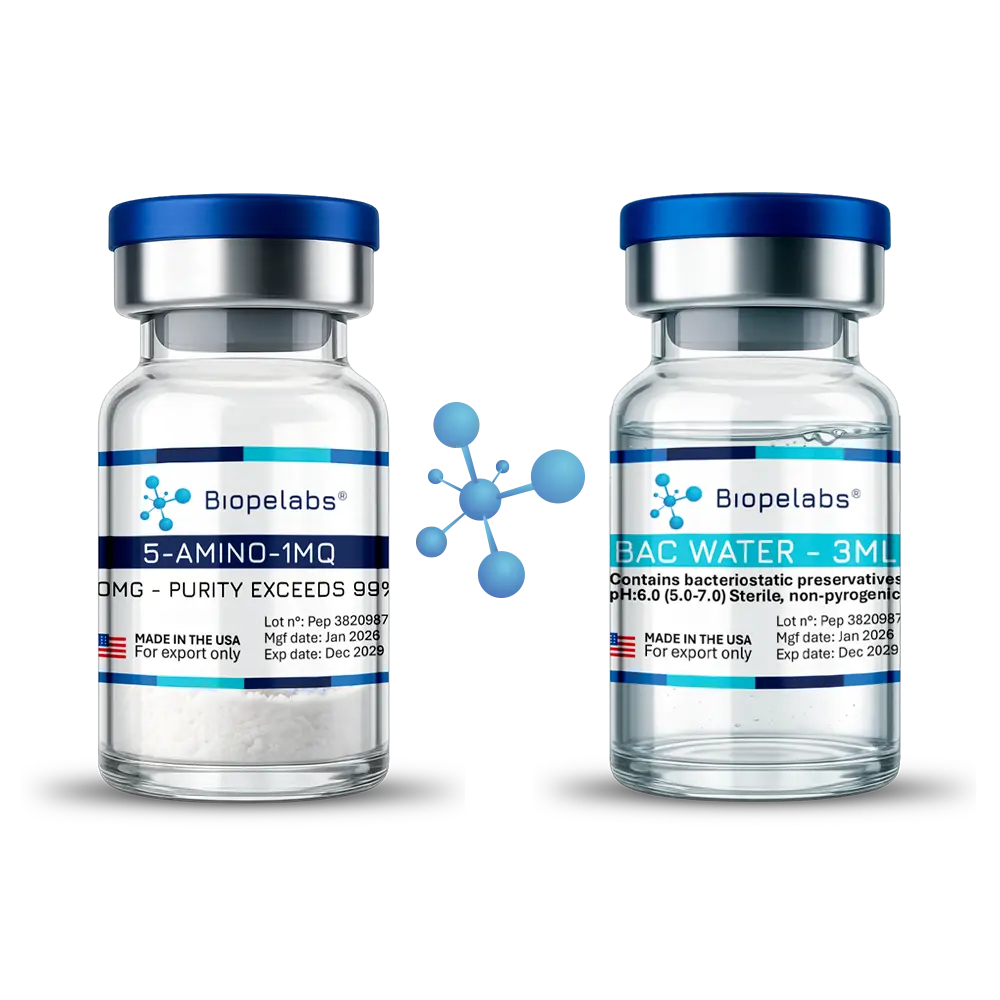
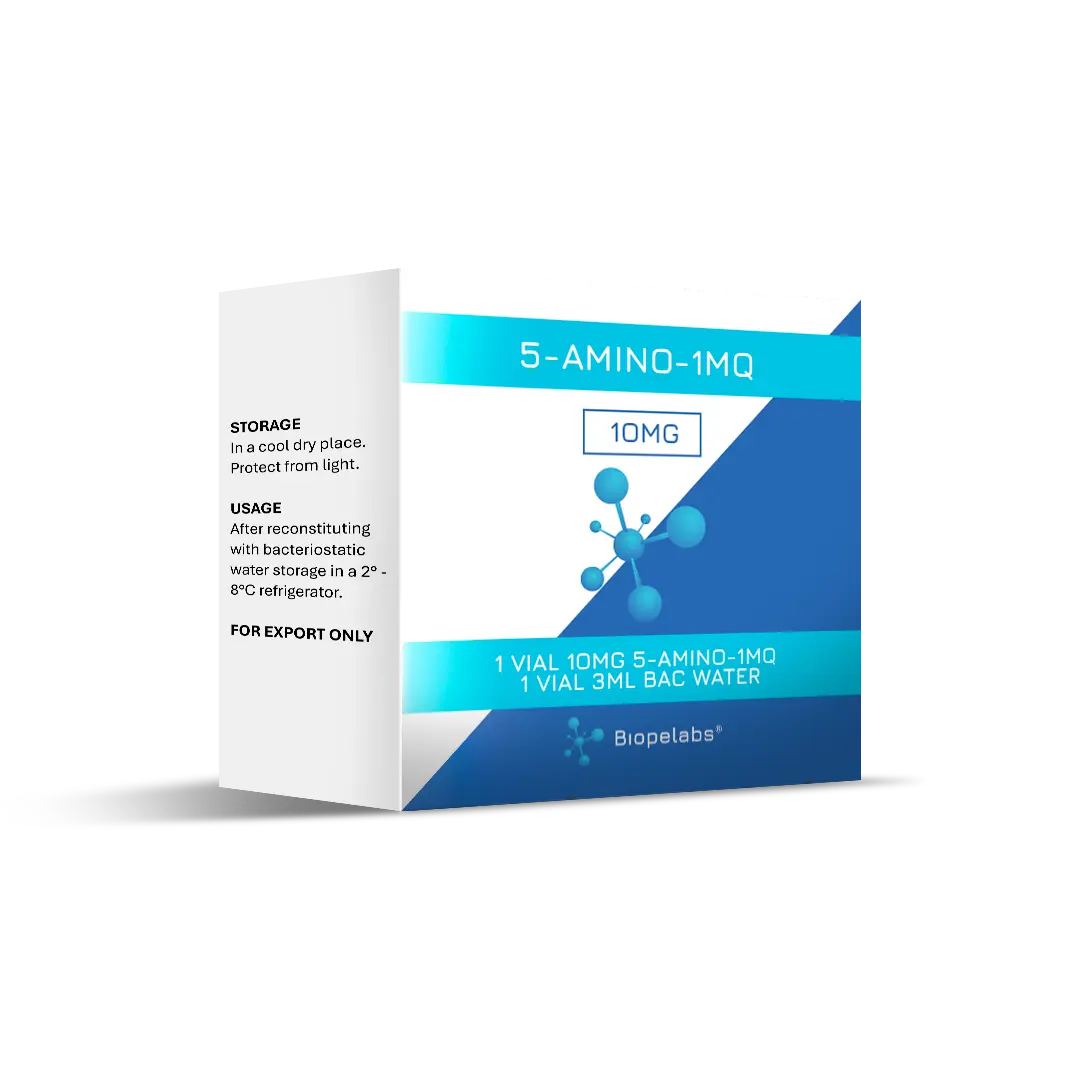


5-Amino-1MQ is a synthetic compound that acts as an inhibitor of the enzyme nicotinamide N-methyltransferase (NNMT). Inhibition of this enzyme is associated with the regulation of intracellular levels of NAD⁺ and SAM, influencing energy production and metabolic pathways related to lipid metabolism in experimental models.
Preclinical laboratory studies indicate effects on processes related to weight management, muscle mass maintenance, mitochondrial activity, and pathways associated with cellular aging. This methylquinolinium derivative therefore emerges as a compound of scientific interest for fundamental research on metabolism and cellular longevity mechanisms.
Important Information
| Property | Value |
| Molecular Formula | C10H11N2 |
| Molecular Weight | 159.21 g/mol |
| PubChem CID | 950107 |
| Synonyms | 5-amino-1-methylquinolinium, SCHEMBL6403148, CHEMBL4116828, ZMJBCEIHNOWCMC-UHFFFAOYSA-O, STL196667 |
Main Structure of 5-amino-1MQ Peptide
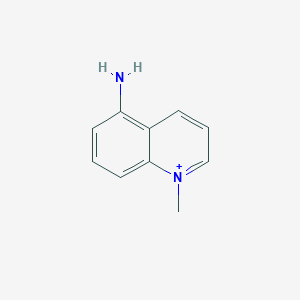
Source: PubChem
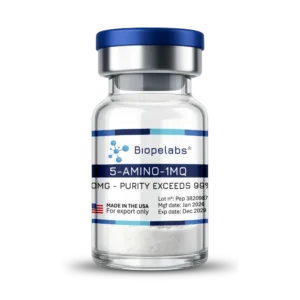
Peptides undergo a lyophilization (freeze-drying) process, a technique that enhances stability and shelf life while preserving purity and molecular structure during storage. No fillers are used during this process.
Biopelabs states: this material is provided exclusively as a chemical input for research purposes. Its use is restricted to in vitro assays and experimental laboratory activities. The information presented is strictly for informational and educational purposes. Handling must be performed only by qualified professionals. This product is not classified as a drug, food, or cosmetic and must not be used, marketed, or represented as such.
5-Amino-1-methylquinolinium (5-Amino-1MQ) is a small molecule belonging to the class of methylquinolinium derivatives. Structurally, it is characterized by a quinolinium core with an amino substitution at position 5 and a methyl group at position 1. This compound has been widely investigated in preclinical research due to its specific interaction with enzymes involved in cellular metabolism.
Experimental studies identify 5-Amino-1MQ as a selective inhibitor of nicotinamide N-methyltransferase (NNMT), an enzyme associated with metabolic, epigenetic, and cellular energy processes.
The primary mechanism investigated for 5-Amino-1MQ involves the inhibition of NNMT, an enzyme responsible for the methylation of nicotinamide. This pathway directly influences NAD⁺ (nicotinamide adenine dinucleotide) metabolism, an essential cofactor for redox reactions, DNA integrity maintenance, and regulation of gene expression.
Suppression of NNMT activity has been associated with significant changes in interconnected metabolic pathways, including:
In preclinical models, exposure of murine adipocytes to 5-Amino-1MQ resulted in a concentration-dependent increase in intracellular NAD⁺ levels, suggesting a direct impact on metabolic homeostasis and cellular function.
In the context of metabolic disorder research, 5-Amino-1MQ has been evaluated in experimental models of diet-induced obesity. Data indicate consistent reductions in body weight, white adipose tissue mass, and adipocyte size, without significant changes in food intake.
These findings suggest that the observed metabolic effects are not related to appetite suppression, but rather to the direct modulation of pathways associated with lipogenesis and energy storage. This profile makes 5-Amino-1MQ a compound of interest in research focused on energy metabolism and experimental obesity.
Beyond metabolic applications, 5-Amino-1MQ has been studied in preclinical oncological research, particularly due to its influence on cellular epigenetic and energy mechanisms.
In studies involving cancer-associated fibroblasts (CAFs), NNMT inhibition by 5-Amino-1MQ demonstrated:
In animal models, these effects were associated with reduced tumor cell proliferation, positioning the compound as an object of interest in investigations focused on isolated or combined experimental strategies.
From a pharmacological perspective, 5-Amino-1MQ exhibits good cellular permeability, a characteristic that supports its use in various experimental models. However, aspects related to metabolic stability, tissue distribution, and elimination remain under investigation.
Additional in vitro and in vivo studies are necessary to further understand its pharmacokinetic and pharmacodynamic profile, particularly regarding tissue selectivity and minimization of off-target effects.
5-Amino-1MQ represents a compound of high interest in contemporary scientific research, especially in studies related to energy metabolism, epigenetic regulation, and tumor biology. Its role as a selective NNMT inhibitor positions it as a valuable tool for investigating complex metabolic and cellular mechanisms.
The use of 5-Amino-1MQ remains restricted to research purposes, and it is essential that any investigation follows rigorous scientific protocols and applicable regulatory standards.
Conlon, N., & Ford, D. (2022). A systemic approach to NAD⁺ restoration... Biochemical Pharmacology, 114946. https://doi.org/10.1016/j.bcp.2022.114946
Myong, S., Nguyen, A., & Challa, S. (2024). Biological functions and therapeutic potential of NAD⁺ metabolism in gynecologic cancers. Cancers, 16. https://doi.org/10.3390/cancers16173085
Li, X., Pi, Y., Chen, Y., Zhu, Q., & Xia, B. (2022). Nicotinamide N-methyltransferase: a promising biomarker and target for human cancer therapy. Frontiers in Oncology, 12. https://doi.org/10.3389/fonc.2022.894744
Liu, J., Deng, Z., Zhu, X., Zeng, Y., Guan, X., & Li, J. (2021). Functions of nicotinamide N-methyltransferase in obesity and type 2 diabetes. BioMed Research International, 2021. https://doi.org/10.1155/2021/9924314

This content was reviewed by Dr. Ky H. Le, MD. Dr. Ky H. Le is a family physician based in Aiea, Hawaii. He earned his medical degree from St. George's University School of Medicine and has been practicing for over 20 years. He has expertise in the treatment of obesity, diabetes, hypertension, and high blood pressure, among other conditions. Dr. Ky H. Le accepts Medicare, Aetna, Humana, Blue Cross, and United Healthcare.
Ref.: https://health.usnews.com/doctors/ky-le-371599#expertise
Only logged in customers who have purchased this product may leave a review.
| Weight | 40 g |
|---|---|
| Dimensions | 7 × 3,6 × 8 cm |

Reviews
There are no reviews yet.