
SLU-PP-332 acts through direct activation of the orphan nuclear receptors ERRα, ERRβ, and ERRγ, which are key regulators of mitochondrial function and oxidative metabolism. These receptors control the transcription of genes involved in:
• Oxidative phosphorylation
• Lipid metabolism
• Aerobic capacity
• Basal energy expenditure
Unlike hormonal peptides, SLU-PP-332 does not rely on membrane receptors or endocrine secretion, acting directly within the cell nucleus as a transcriptional modulator. Preclinical studies demonstrate increased muscular oxidative capacity, improved mitochondrial efficiency, and metabolic changes similar to those induced by physical exercise, without mechanical muscle stimulation.
The compound is currently in the preclinical stage and is used exclusively as a scientific research tool in metabolism, obesity, and mitochondrial physiology.
Important Information
| Properties | Value |
| Molecular Formula | Does not have an amino acid sequence or peptide structure |
| Molecular Weight | ≈ 350–400 g/mol |
| Synonyms | SLU-PP-332, Pan-ERR agonist, ERRα/β/γ agonist, Exercise-mimetic compound (in academic context) |
Main Structure of the SLU-PP-332 Molecule
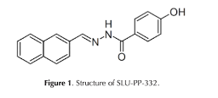
Fonte: científico
Role of SLU-PP-332 in Body Fat Reduction
SLU-PP-332 contributes to body fat reduction through modulation of energy metabolism, rather than through classical direct lipolytic action (as seen with hormones or peptides).
Its core mechanism involves:
• Activation of nuclear receptors ERRα, ERRβ, and ERRγ
• Increased gene expression related to fatty acid oxidation
• Stimulation of mitochondrial biogenesis and efficiency
• Elevation of basal energy expenditure, particularly in muscle tissue
This activation leads the body to utilize fat as a primary energy source, promoting a negative energy balance, which is essential for reducing adipose tissue.
Important Technical Distinction
❌ Does not act by reducing appetite
❌ Not a direct lipolytic agent
❌ Does not directly interact with GLP-1, GIP, or insulin
✔️ Acts by increasing oxidative metabolic capacity, facilitating the mobilization and utilization of body fat over time, especially when associated with energy demand
Scientific Summary
From a physiological perspective, SLU-PP-332:
Promotes body fat reduction by increasing energy expenditure and mitochondrial lipid oxidation, mimicking metabolic adaptations observed after regular physical exercise, according to the latest available scientific updates (Jan-2026).
Intended Use
Biopelabs advises: this material is provided exclusively as a chemical input for research purposes. Its use is restricted to in vitro assays and experimental activities in laboratory environments. The information presented is strictly for informational and educational purposes. Handling must be carried out only by properly qualified professionals. This product is not classified as a medication, food, or cosmetic and must not be used, marketed, or described as such.
Scientific Applications of SLU-PP-332 in Research
SLU-PP-332 is a small synthetic molecule developed to act as a pan-ERR agonist, interacting with all three estrogen-related receptors: ERRα, ERRβ, and ERRγ. These nuclear receptors play a central role in regulating genes associated with energy metabolism, mitochondrial function, and cellular metabolic adaptation.
By modulating metabolic pathways broadly involved in energy homeostasis, SLU-PP-332 has been extensively investigated in preclinical models focused on muscular, cardiac, and systemic metabolism.
Interaction with ERR Receptors and Transcriptional Activation
Biochemical studies demonstrate that SLU-PP-332 exhibits differential functional affinity among ERR subtypes, with higher relative potency for ERRα, followed by ERRβ and ERRγ. Binding occurs directly at the ligand-binding domain of these nuclear receptors.
Structural modeling indicates that aromatic portions of the molecule establish π–π stacking interactions with specific residues within the ERR active site, stabilizing the receptor’s active conformation. Once activated, ERRs recognize ERR response elements (ERREs) located in promoter regions of DNA, increasing transcriptional activity of genes involved in:
• Mitochondrial biogenesis
• Energy substrate oxidation
• Cellular oxidative metabolism
Applications in Skeletal Muscle Research
In skeletal muscle cell models, such as C2C12 myoblasts, exposure to SLU-PP-332 results in increased maximal mitochondrial respiratory capacity and stimulation of mitochondrial biogenesis.
Morphological and molecular analyses indicate:
• Increased mitochondrial density
• Elevated mitochondrial DNA copy number
• Higher expression of oxidative phosphorylation proteins
The activity of oxidative enzymes, such as succinate dehydrogenase (SDH), is also increased, reflecting enhanced oxidative capacity in experimental muscle tissue models.
Activation of Exercise-Associated Gene Programs
Transcriptomic studies reveal that SLU-PP-332 induces a gene expression profile similar to that observed after acute aerobic exercise in both animal and human models.
Among regulated genes, DDIT4 stands out, showing transient upregulation, peaking within a few hours and subsequently returning to baseline levels. This pattern mimics physiological responses to exercise and is associated with modulation of the mTOR pathway, which is essential for metabolic adaptation to energy stress.
Other regulated genes include mitochondrial transporters, circadian regulators, and transcription factors involved in energy metabolism, reinforcing the use of SLU-PP-332 as an experimental tool in exercise biology research.
Tissue-Specific Dependence of ERR Isoforms
The metabolic effects of SLU-PP-332 exhibit isoform-specific dependence depending on the tissue analyzed:
• Skeletal muscle: predominantly mediated by ERRα
• Cardiac tissue: greater functional dependence on ERRγ
Genetic models with specific ERR deletions confirm that the absence of these isoforms significantly reduces or abolishes the transcriptional response to the compound, highlighting its context-dependent functional selectivity.
Cardiac Metabolism and Mitochondrial Function
In cardiac tissue, activation of ERRγ by SLU-PP-332 is associated with upregulation of genes involved in:
• Fatty acid oxidation
• Tricarboxylic acid (TCA) cycle
• Electron transport chain
Functional assays demonstrate preserved mitochondrial respiration and increased oxidative capacity in cultured cardiomyocytes, including enhanced utilization of fatty acids as an energy substrate.
Investigated Systemic Metabolic Effects
In animal models, metabolic analyses indicate that SLU-PP-332 promotes a shift in substrate utilization, favoring lipid oxidation over carbohydrate metabolism.
This adaptation occurs without significant changes in food intake or locomotor activity, suggesting an increase in basal energy expenditure similar to that observed during post-exercise recovery periods.
Mitochondrial Biogenesis and Chronic Adaptation
Repeated administration of SLU-PP-332 in experimental models leads to a sustained increase in mitochondrial content in skeletal muscle. A phenotypic shift in muscle fibers toward more oxidative profiles is also observed, associated with greater metabolic efficiency.
Unlike genes transiently induced by acute exercise, structural and enzymatic mitochondrial genes remain elevated during chronic experimental protocols.
Structural Considerations and Molecular Selectivity
SLU-PP-332 was developed through structural modifications of previously described ERR agonists, specifically optimized to enhance interaction with ERRα. These modifications resulted in increased potency and functional selectivity.
Selectivity assays indicate no significant activity on classical estrogen receptors (ERα and ERβ), nor on other nuclear receptors or G protein-coupled receptors evaluated.
Cellular Stress Response and Autophagy
In cardiomyocytes, SLU-PP-332 induces changes consistent with moderate activation of autophagy, including alterations in markers associated with autophagic flux. Regulation of DDIT4 contributes to temporary suppression of the mTOR pathway, favoring metabolic adaptation and cellular remodeling processes.
Final Considerations
SLU-PP-332 represents a valuable experimental tool for investigating transcriptional programs mediated by ERR receptors. Its isoform- and tissue-dependent activity enables controlled exploration of molecular mechanisms regulating energy metabolism, mitochondrial function, and exercise-like adaptations.
Its use remains restricted to scientific research, requiring strict adherence to appropriate experimental protocols and applicable regulatory standards.
References
Billon C, Sitaula S, Banerjee S, Welch R, Elgendy B, Hegazy L, et al. (2023). A synthetic ERRα/β/γ agonist induces an acute aerobic exercise-like response. American Chemical Society (ACS). https://doi.org/10.1021/acschembio.2c00720
Zhidkova EM, Lylova ES, Grigoreva DD, et al. (2022). Nutrient sensor REDD1 in cancer and inflammation. MDPI AG. https://doi.org/10.3390/ijms23179686
Xu W, Billon C, Li H, et al. (2024). Novel pan-ERR agonists improve heart failure by enhancing cardiac fatty acid metabolism. Ovid Technologies. https://doi.org/10.1161/circulationaha.123.066542
Billon C, Schoepke E, Avdagic A, et al. (2024). A synthetic ERR agonist alleviates metabolic syndrome. Elsevier BV. https://doi.org/10.1124/jpet.123.001733
Scientific Reviewer
This content was reviewed by Dr. Ky H. Le, MD. Dr. Ky H. Le is a family medicine physician in Aiea, Hawaii. He earned his medical degree from St. George’s University School of Medicine and has over 20 years of clinical experience. His expertise includes obesity, diabetes, hypertension, and related conditions. He accepts Medicare, Aetna, Humana, Blue Cross, and United Healthcare.
Ref.: https://health.usnews.com/doctors/ky-le-371599#expertise
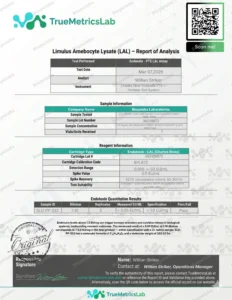
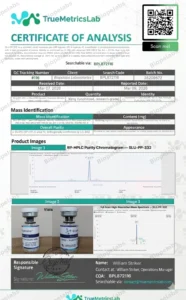
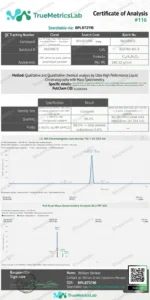
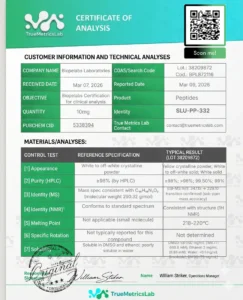
Important note: Following the lyophilization process, the product in the vial exhibited certain changes in its physical appearance. However, these changes did not affect its physicochemical or molecular composition (Batch No. 38209872).
Only logged in customers who have purchased this product may leave a review.
| Weight | 40 g |
|---|---|
| Dimensions | 7 × 3,6 × 8 cm |



Reviews
There are no reviews yet.