
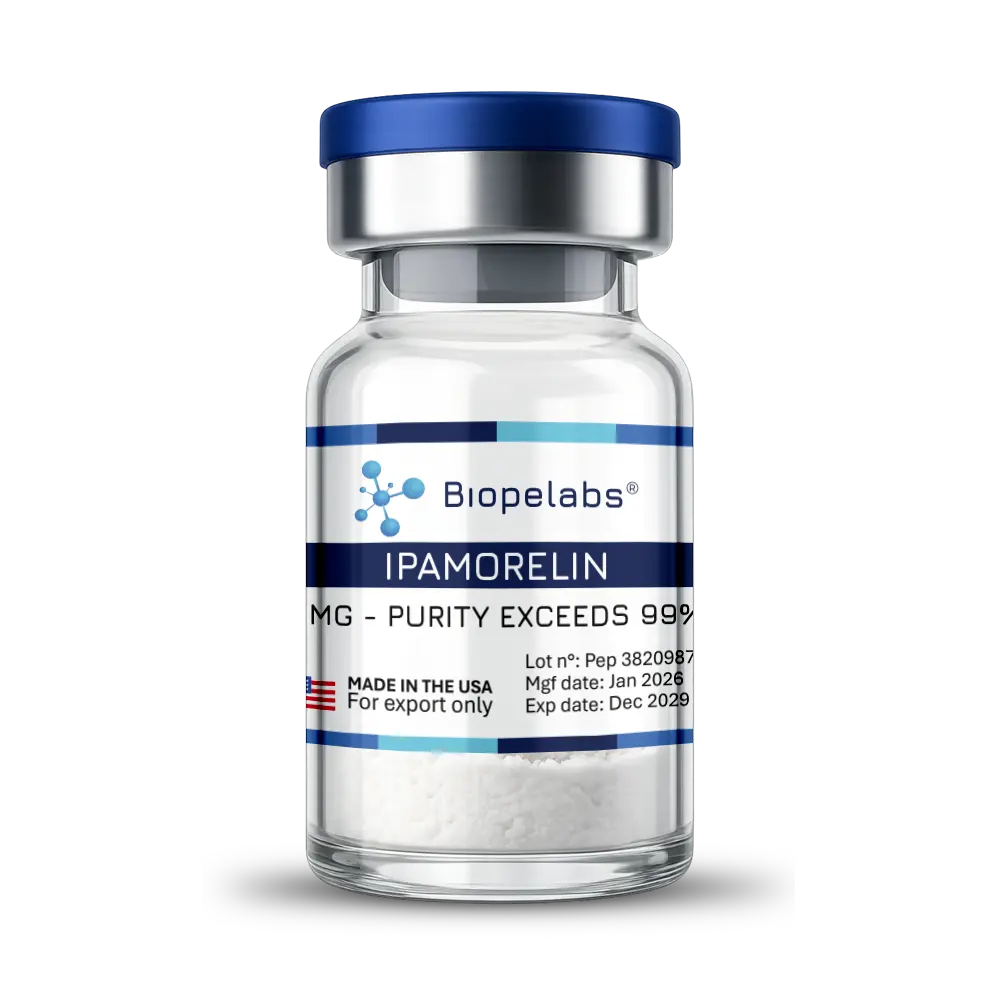
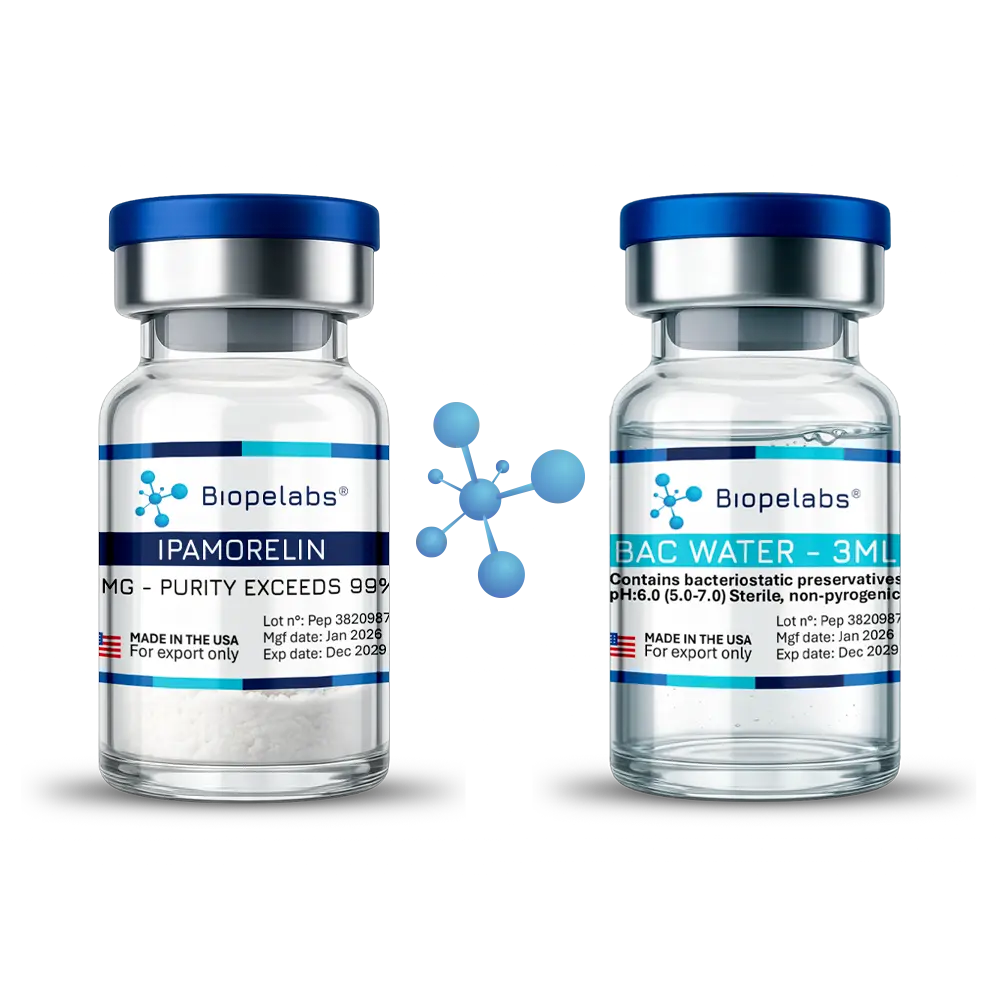
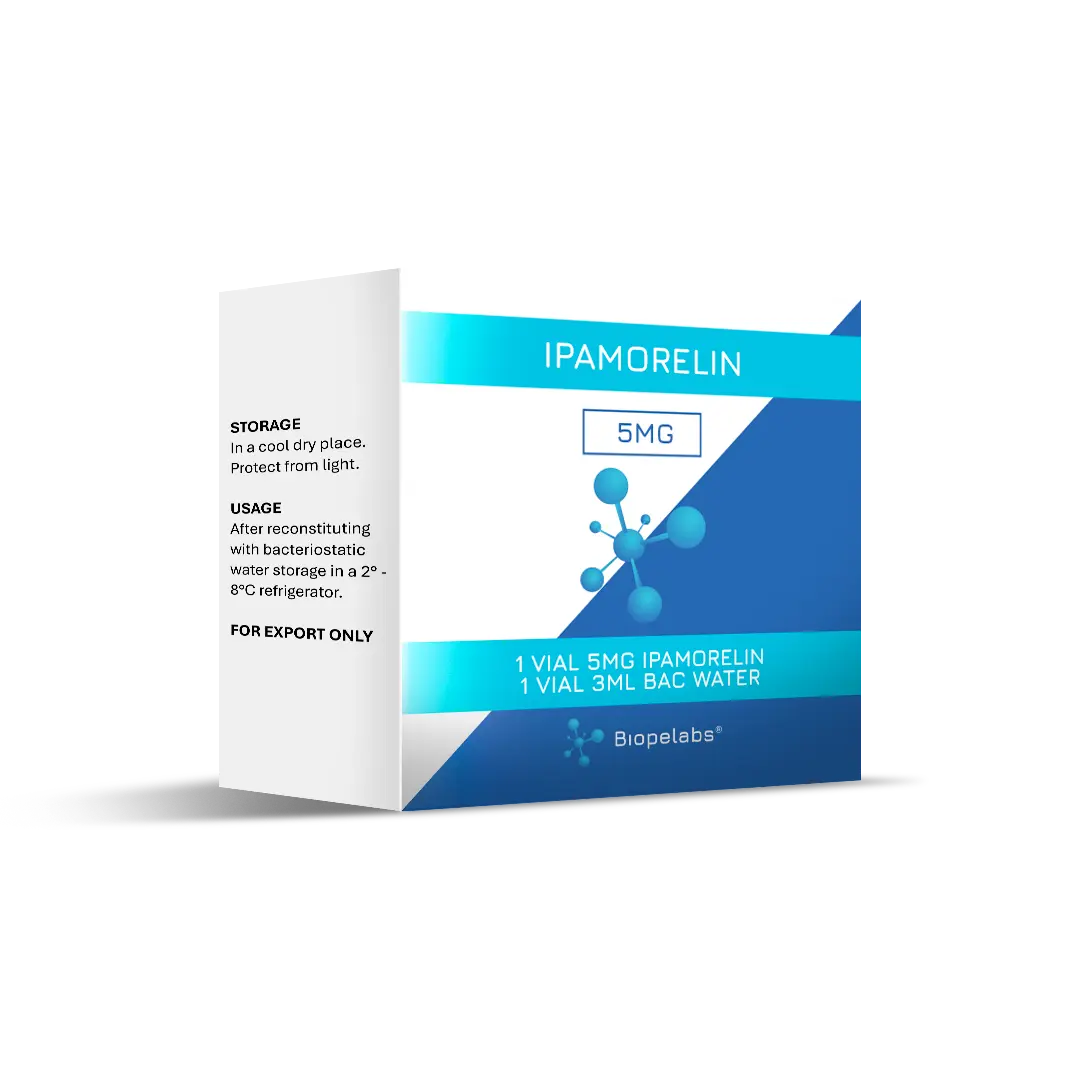


Ipamorelin is a synthetic peptide widely studied as a growth hormone secretagogue in laboratory research. This compound belongs to the class of growth hormone-releasing peptides (GHRPs) and serves as a research tool to examine pituitary receptor interactions and mechanisms of growth hormone release.
Ipamorelin is a pentapeptide (composed of 5 amino acids) that functions as a ghrelin mimetic in experimental models. Developed in the 1990s for research applications, this compound demonstrates selective growth hormone release properties without significantly affecting other pituitary hormones, distinguishing it from earlier-generation peptides in laboratory studies.
The compound exhibits high specificity for the GHS-R1a receptor, enabling targeted investigation of physiological responses in vitro. Its selective mechanism has established it as a valuable research tool for studying growth hormone signaling pathways, metabolic regulation, and receptor-ligand interactions in scientific studies.
| Properties | Value |
| Molecular Formula | C38H49N9O5 |
| Molecular Weight | 711.9 g/mol |
| Synonyms: | 170851-70-4, Ipamorelin [INN], NNC-26-0161, UNII-Y9M3S784Z6 |
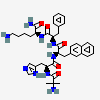
Source: PubChem
The peptides undergo a lyophilization process, a technique that contributes to greater stability and durability while preserving purity and molecular structure during storage. It is important to note that no fillers are used during this process.
Biopelabs advises: this material is provided exclusively as a chemical input for research purposes. Its use is restricted to in vitro assays and experimental activities in laboratory settings. The information presented is strictly for informational and educational purposes. Handling must be carried out only by properly qualified professionals. The product is not classified as a medication, food, or cosmetic, and must not be used, marketed, or described as such.
Ipamorelin is a specific growth hormone (GH) secretagogue widely investigated for its distinct receptor-binding characteristics and physiological mechanisms in research environments.
This peptide acts through selective binding to ghrelin receptors, promoting pulsatile release of growth hormone, aligning with natural secretion patterns. Its molecular structure allows for specific receptor activation while avoiding cross-reactivity with other hormonal pathways.
Research indicates that Ipamorelin stimulates GH release without affecting levels of ACTH, cortisol, prolactin, or thyroid hormones, making it a valuable tool in controlled laboratory experiments aimed at analyzing the isolated effects of growth hormone.
Investigations in bone tissue demonstrate that Ipamorelin impacts mineral content and dimensional bone growth. Studies suggest that the peptide influences periosteal bone formation through growth hormone-mediated pathways.
In controlled environments, Ipamorelin has shown effectiveness in preventing glucocorticoid-induced bone degradation by activating bone formation pathways. These observations support research into cellular-level mechanisms of bone remodeling.
Growth hormone released as a result of Ipamorelin activation affects lipolytic pathways in adipose tissue. Laboratory analyses reveal increased circulation of free fatty acids and alterations in glucose metabolism.
Research on insulin sensitivity shows complex interactions between GH signaling and metabolic regulation, which continue to be an active focus of in vitro investigation.
Studies on tissue regeneration suggest a potential role for Ipamorelin in collagen synthesis pathways. The GH–IGF-1 axis activated by the peptide appears to influence cellular proliferation and protein synthesis.
Laboratory studies indicate activation of angiogenic pathways and enhanced tissue remodeling processes, supporting investigations into recovery and regeneration at the molecular level.
Laboratory investigations evaluating Ipamorelin’s interaction with ghrelin receptors in cholinergic neurons focus on gastric emptying patterns. These studies analyze gastric smooth muscle contractility.
Preclinical models examining post-surgical dysmotility explore contractile responses through these enteric pathways in experimental settings.
[1] K. Raun et al., "Ipamorelin, the first selective growth hormone secretagogue," Oxford University Press (OUP), Nov. 1998. doi: 10.1530/eje.0.1390552
[2] J. Svensson et al., "The GH secretagogues ipamorelin and GHRP-6 increase bone mineral content in adult rats," Bioscientifica, Jun. 2000. doi: 10.1677/joe.0.1650569
[3] N. B. Andersen et al., "The growth hormone secretagogue ipamorelin counteracts glucocorticoid-induced decrease in bone formation in adult rats," Elsevier BV, Oct. 2001. doi: 10.1054/ghir.2001.0239
[4] S.-H. Kim & M.-J. Park, "Effects of growth hormone on glucose metabolism and insulin resistance in humans," Korean Society of Pediatric Endocrinology, Sep. 2017. doi: 10.6065/apem.2017.22.3.145
[5] D. K. Sinha et al., "Beyond the androgen receptor: the role of growth hormone secretagogues in modern management of body composition in hypogonadal men," AME Publishing Company, Mar. 2020. doi: 10.21037/tau.2019.11.30
[6] B. Greenwood-Van Meerveld et al., "Efficacy of ipamorelin, a ghrelin mimetic, on gastric dysmotility in a rodent model of postoperative ileus," Informa UK Limited, Oct. 2012. doi: 10.2147/jep.s35396

This content was reviewed by Dr. Ky H. Le, MD. Dr. Ky H. Le is a family physician based in Aiea, Hawaii. He earned his medical degree from St. George's University School of Medicine and has been practicing for over 20 years. He has expertise in the treatment of obesity, diabetes, hypertension, and high blood pressure, among other conditions. Dr. Ky H. Le accepts Medicare, Aetna, Humana, Blue Cross, and United Healthcare.
Ref.: https://health.usnews.com/doctors/ky-le-371599#expertise
Only logged in customers who have purchased this product may leave a review.
| Weight | 40 g |
|---|---|
| Dimensions | 7 × 3,6 × 8 cm |

Reviews
There are no reviews yet.