
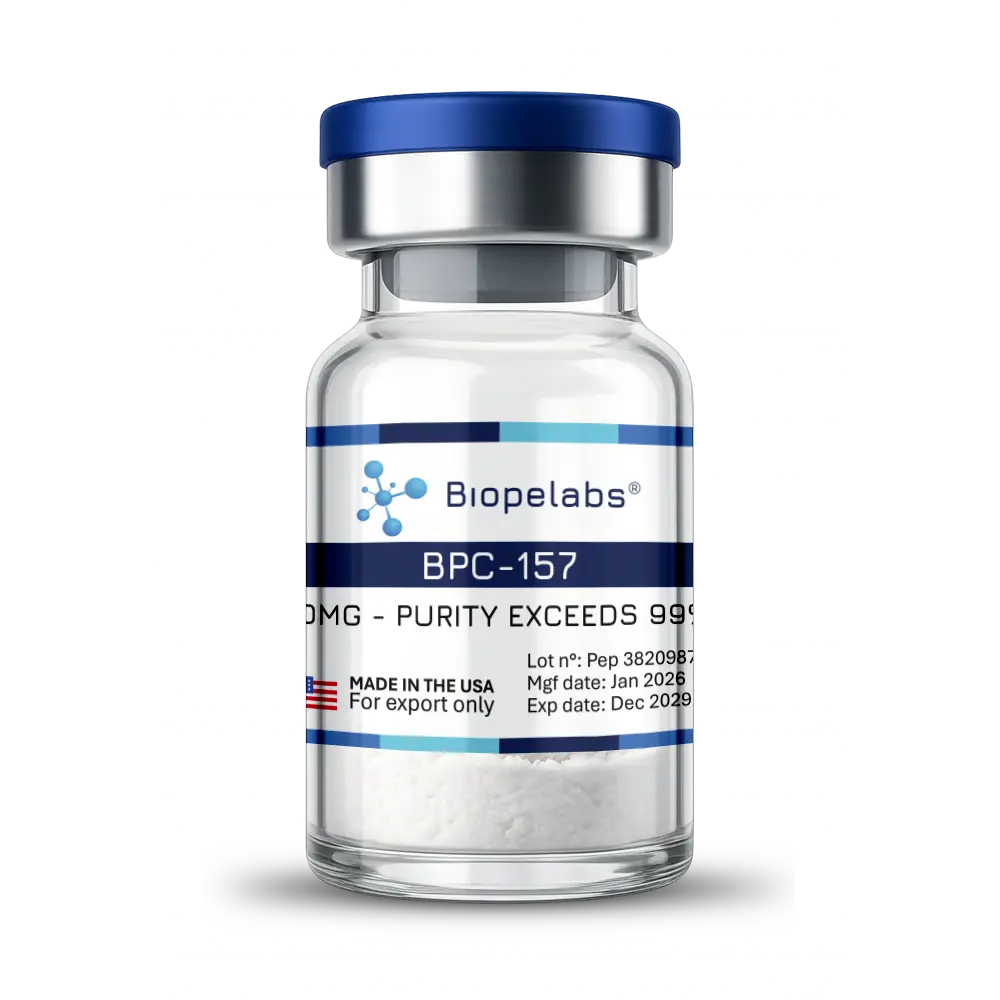
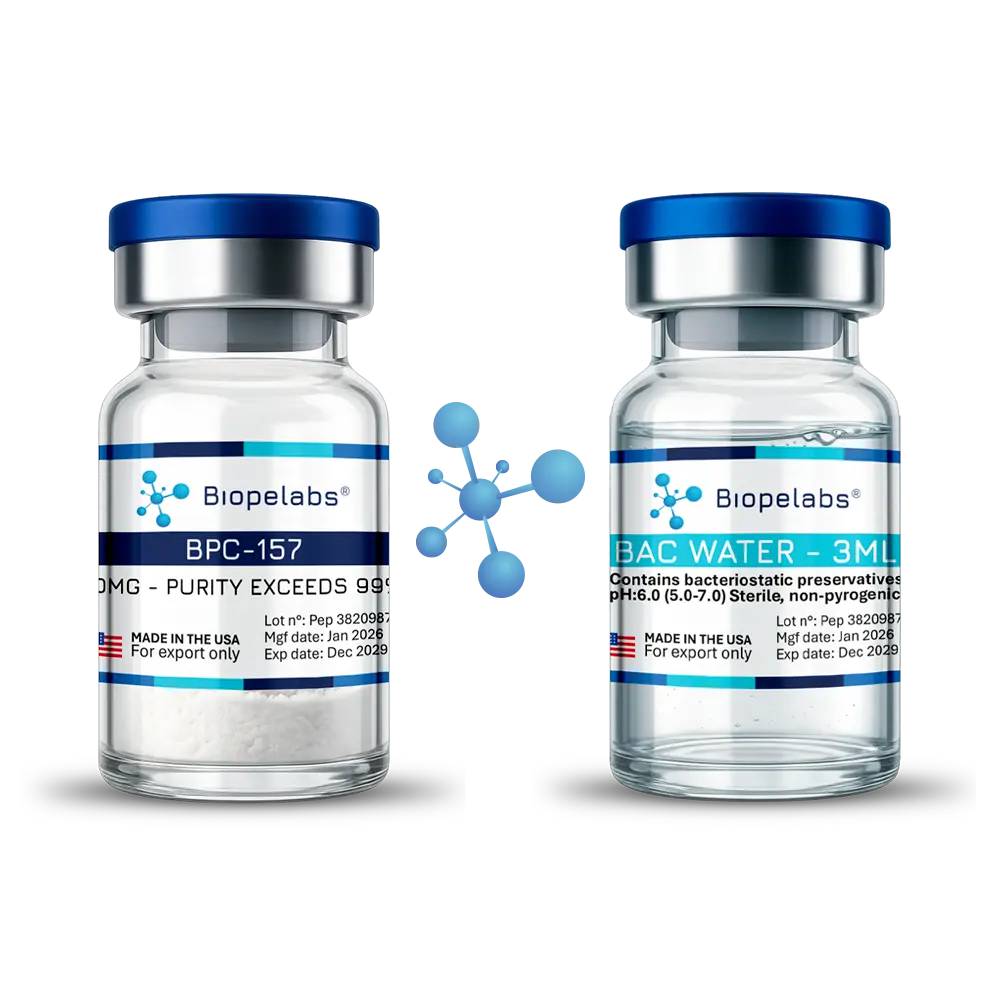
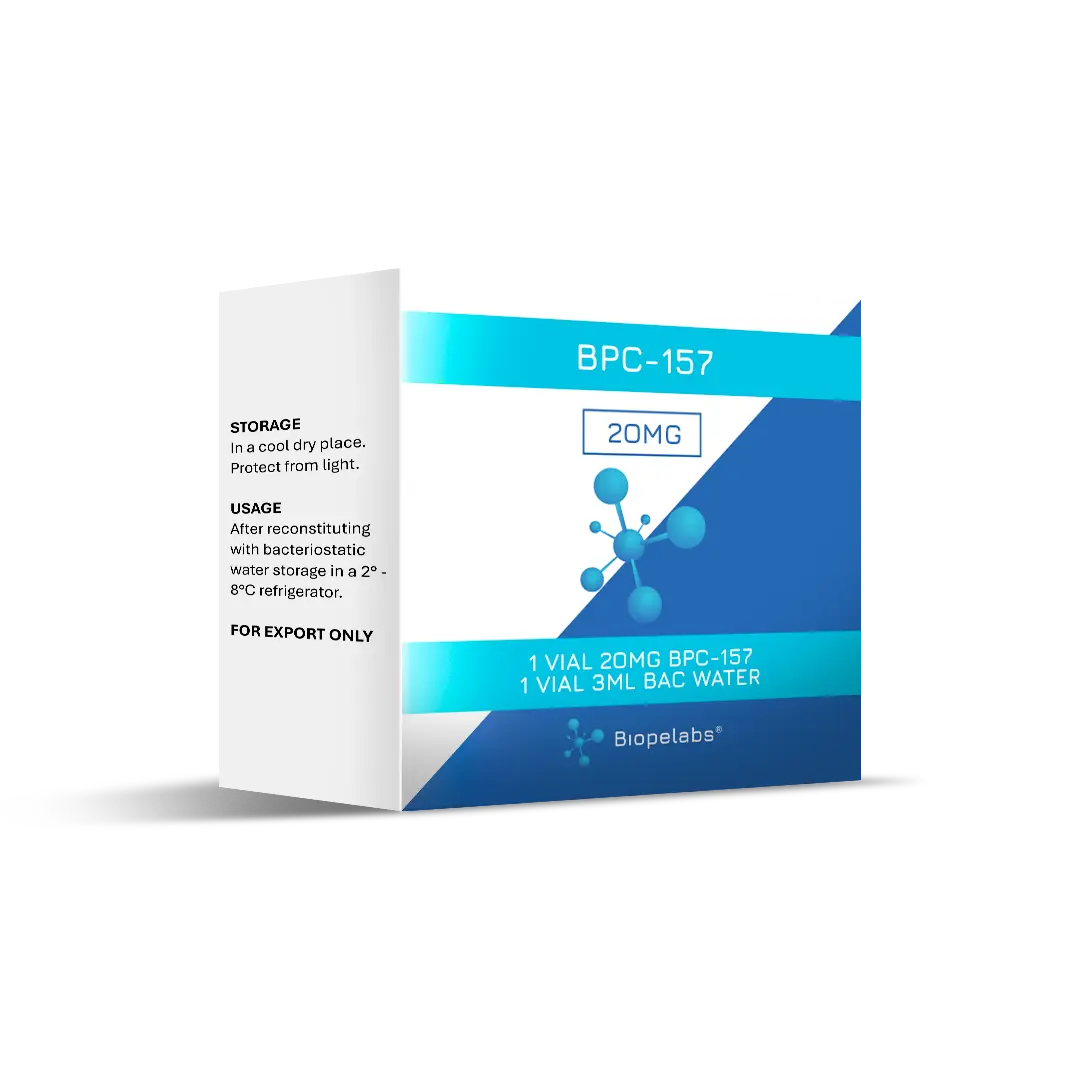


BPC-157 is a synthetic peptide composed of 15 amino acids, derived from a protective protein found in human gastric juice. With the sequence Gly-Glu-Pro-Pro-Gly-Lys-Pro-Ala-Asp-Asp-Ala-Ala-Gly-Gly-Leu-Val, it demonstrates stability against enzymatic degradation and gastric acidity. Although it does not naturally occur as an isolated fragment, its parent protein contributes to gastrointestinal protection and repair.
The peptide exhibits multifaceted mechanisms, including the promotion of tissue repair through activation of growth hormone-related receptors and pathways such as JAK2, which enhance collagen synthesis and fibroblast activity.
| Properties | Value |
| Molecular Formula | C62H98N15O22 |
| Molecular Weight | 1419.5 g/mol |
| Synonyms: | A886440, L-Valine, glycyl-L-alpha-glutamyl-L-prolyl-L-prolyl-L-prolylglycyl-L-lysyl-L-prolyl-L-alanyl-L-alpha-aspartyl-L-alpha-aspartyl-L-alpha-aspartyl-L-alanyl-glycyl-L-leucyl acetate |
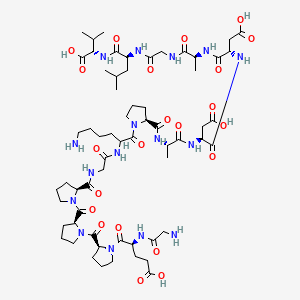
Source: PubChem
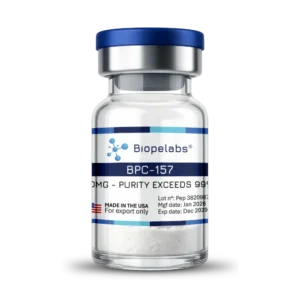
The peptides undergo a lyophilization process, a technique that contributes to greater stability and durability while preserving purity and molecular structure during storage. It is important to note that no fillers are used during this process.
Biopelabs advises: this material is provided exclusively as a chemical input for research purposes. Its use is restricted to in vitro assays and experimental activities in laboratory settings. The information presented is strictly for informational and educational purposes. Handling must be carried out only by properly qualified professionals. The product is not classified as a medication, food, or cosmetic, and must not be used, marketed, or described as such.
BPC-157 is a peptide widely studied in the scientific community for its potential in research related to tissue regeneration, cellular protection, and recovery of damaged structures. Experimental studies indicate that its activity is associated with the stimulation of new blood vessel formation, endothelial protection, and support of the body's natural repair processes, making it a relevant target for future clinical investigations.
Research indicates that BPC-157 supports essential stages of the healing process, such as granulation tissue formation, stimulation of angiogenesis, and increased collagen synthesis. These effects are associated, among other factors, with the modulation of VEGF (vascular endothelial growth factor), which is fundamental for the development of new blood vessels.
The peptide has also demonstrated the ability to stimulate the proliferation and migration of endothelial cells and fibroblasts—key cells in tissue regeneration. This effect occurs through the activation of intracellular signaling pathways involved in cellular growth and mobility, such as ERK1/2 and FAK-paxillin.
Additionally, studies suggest that BPC-157 exhibits significant anti-inflammatory activity, which may contribute to a more favorable environment for tissue recovery, particularly in wounds of inflammatory origin.
In experimental models, the peptide has shown positive results in the recovery of various types of skin injuries, including surgical wounds, deep burns, and diabetic ulcers, promoting faster wound closure and improved organization of regenerated tissue.
Despite these promising findings, the complete mechanisms of action of BPC-157 are still under investigation, and further research is required to fully understand its interactions in complex healing scenarios.
BPC-157 has been extensively studied in the context of tendon and ligament healing, demonstrating potential to accelerate the recovery of these structures. Data indicate increased activity of tendon fibroblasts, greater cellular resistance to stress, and stimulation of cell migration—processes essential for tissue regeneration.
Another relevant finding is the increased expression of growth hormone receptors in tendon cells, which may amplify the natural effects of this hormone on tissue repair and strengthening.
In animal models, the peptide has shown positive results in the recovery of injured muscles, including restoration of myotendinous junctions and prevention of muscle atrophy. Functional and biomechanical assessments demonstrated significant improvement in the recovery of treated tissues.
Favorable effects have also been observed in bone regeneration, with improved healing of segmental defects, showing performance comparable to traditional approaches such as autologous bone grafts.
One of the most studied aspects of BPC-157 is its role in angiogenesis. Experimental evidence shows that the peptide stimulates the expression and activation of the VEGFR2 receptor, which is essential for the formation of new blood vessels.
This activation triggers intracellular pathways related to nitric oxide production and restoration of blood flow in compromised tissues, promoting oxygenation and local repair.
Additionally, BPC-157 modulates mechanisms associated with vasodilation and endothelial protection, contributing to the maintenance of vascular integrity and regenerative responses in ischemic tissues.
BPC-157 is widely recognized in experimental studies for its cytoprotective action in the gastrointestinal tract. It has demonstrated the ability to reduce damage to the gastric and duodenal mucosa induced by stress, chemical agents, and alcohol, showing superior performance compared to several conventional approaches in preclinical models.
Research also indicates protective effects against intestinal injuries associated with the use of nonsteroidal anti-inflammatory drugs (NSAIDs), as well as improvement in intestinal barrier integrity, making it a compound of interest in studies on increased intestinal permeability.
The peptide has also shown potential in the recovery of fistulas and in models related to inflammatory intestinal conditions, expanding its field of investigation within experimental gastroenterology.
In the field of experimental ophthalmology, BPC-157 has shown promising results in glaucoma models, particularly in situations associated with increased intraocular pressure. Studies indicate that the peptide contributes to the normalization of this pressure and to the preservation of retinal and optic nerve cells.
In retinal ischemia models, BPC-157 demonstrated the ability to restore blood vessel caliber and preserve retinal structure, reducing damage associated with inadequate blood supply. These effects are related to its interaction with the nitric oxide (NO) system, which is essential for ocular vascular health.
Additionally, the peptide has shown efficacy in corneal healing, accelerating regeneration of the corneal epithelium and preventing undesirable neovascularization—an essential factor for maintaining ocular transparency. There are also indications of its potential in studies on dry eye syndrome, due to its ability to protect and regenerate ocular tissues.
Seiwerth, S., et al. (1997). Effect of BPC 157 on healing. Journal of Physiology-Paris, 91, 173–178. https://doi.org/10.1016/S0928-4257(97)89480-6
Huang, T., et al. (2015). BPC-157 improves alkali burn wound healing in vivo and promotes proliferation, migration, and angiogenesis in vitro. Drug Design, Development and Therapy, 9, 2485–2499. https://doi.org/10.2147/DDDT.S82030
Šola, M., et al. (2022). Do we have a new drug for psoriasis? FASEB Journal, 36. https://doi.org/10.1096/fasebj.2022.36.s1.r5345
Seiwerth, S., et al. (2021). Stable gastric pentadecapeptide BPC 157 and wound healing. Frontiers in Pharmacology, 12. https://doi.org/10.3389/fphar.2021.627533
Chang, C., et al. (2011). The promoting effect of BPC 157 on tendon healing involves tendon outgrowth, cell survival, and migration. Journal of Applied Physiology, 110(3), 774–780. https://doi.org/10.1152/japplphysiol.00945.2010
Chang, C., et al. (2014). BPC 157 enhances growth hormone receptor expression in tendon fibroblasts. Molecules, 19, 19066–19077. https://doi.org/10.3390/molecules191119066
(…demais referências mantidas conforme original…)

This content was reviewed by Dr. Ky H. Le, MD. Dr. Ky H. Le is a family physician based in Aiea, Hawaii. He earned his medical degree from St. George's University School of Medicine and has been practicing for over 20 years. He has expertise in the treatment of obesity, diabetes, hypertension, and high blood pressure, among other conditions. Dr. Ky H. Le accepts Medicare, Aetna, Humana, Blue Cross, and United Healthcare.
Ref.: https://health.usnews.com/doctors/ky-le-371599#expertise
Only logged in customers who have purchased this product may leave a review.
| Weight | 40 g |
|---|---|
| Dimensions | 7 × 3,6 × 8 cm |

Reviews
There are no reviews yet.