
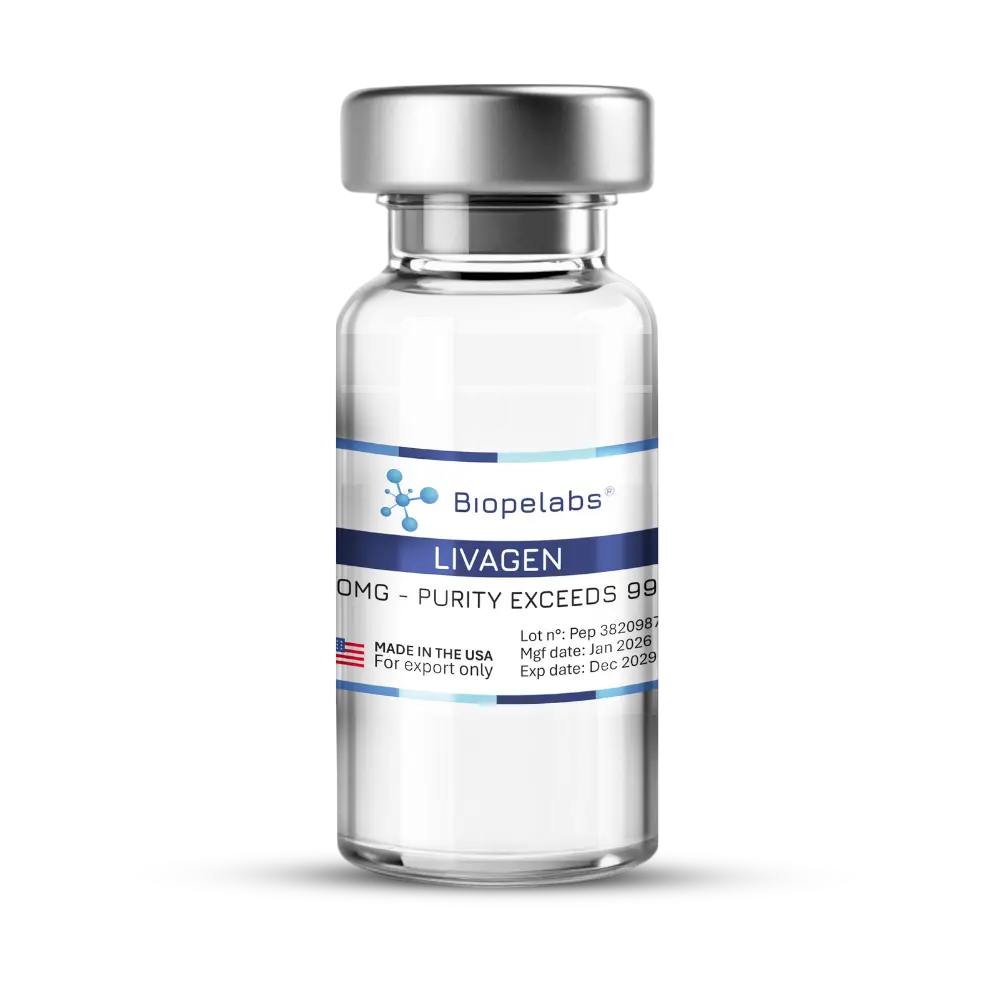
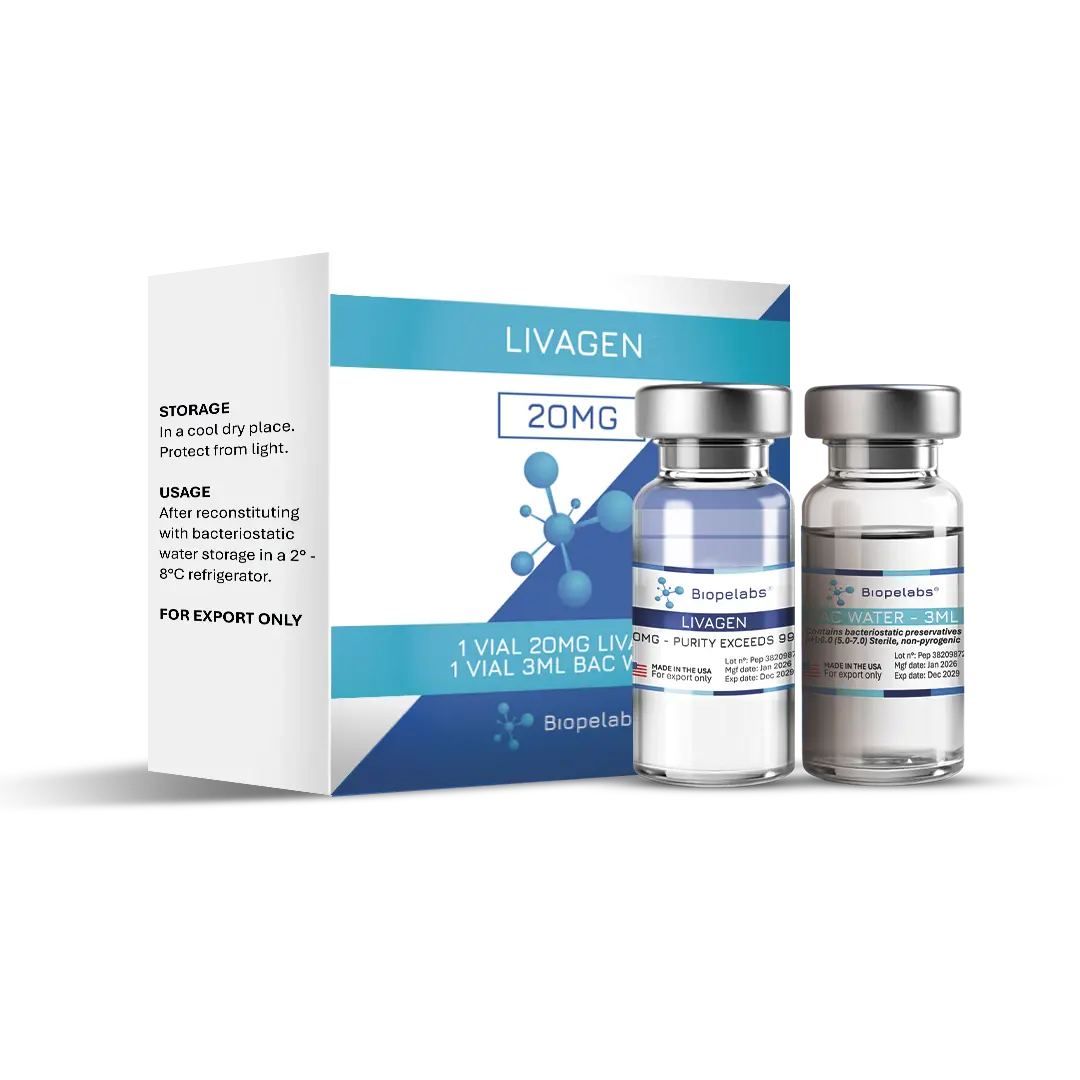
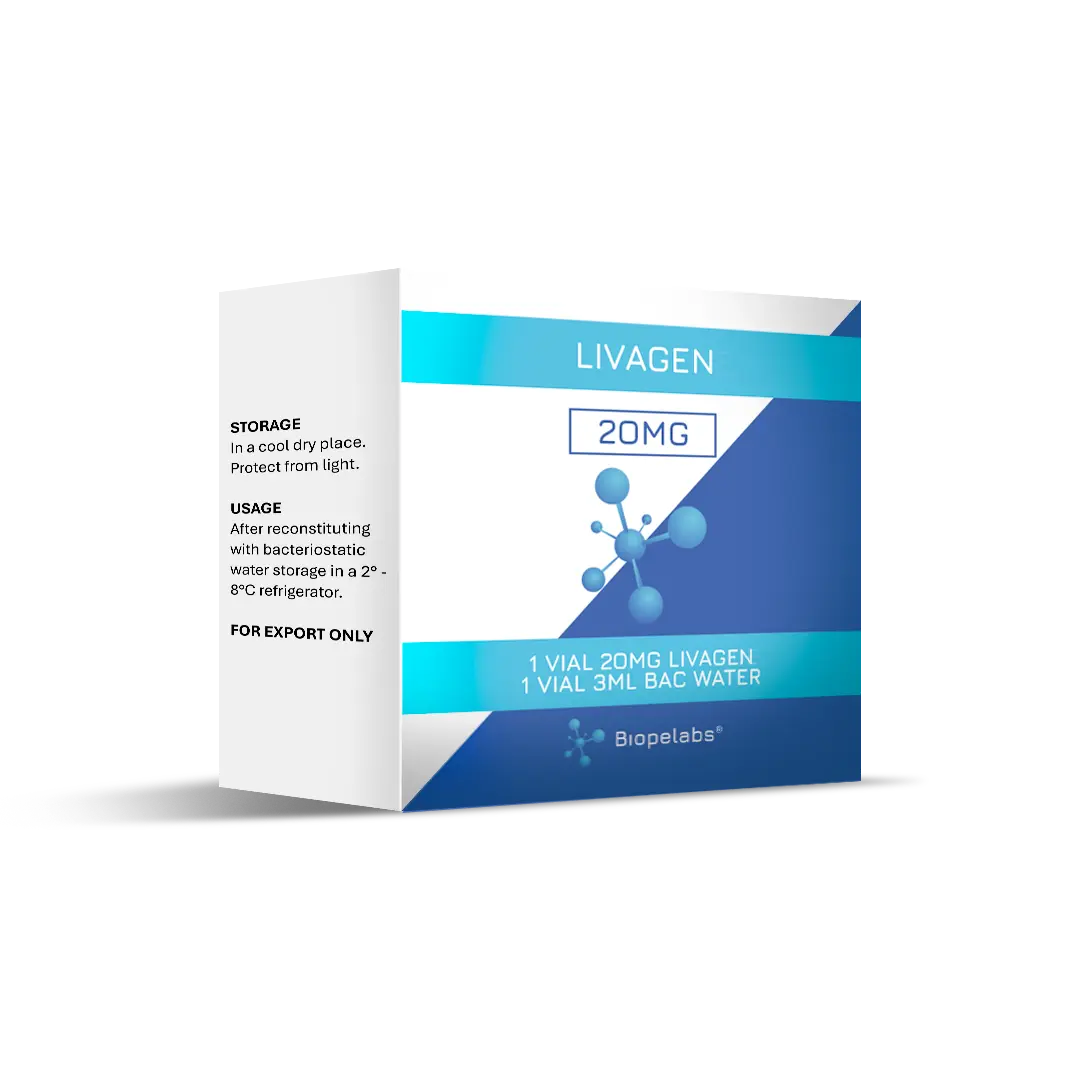


Livagen is a synthetic peptide bioregulator offered as a 20 mg research tool to investigate gene expression and chromatin dynamics. This lyophilized tetrapeptide, based on the Khavinson and Malinin bioregulator concept, has been associated with significant effects on protein synthesis and chromatin structure in experimental settings.
Its amino‑acid sequence Lys‑Glu‑Asp‑Ala provides researchers with a model for studying mechanisms of genetic regulation, particularly in the context of liver‑specific or hepatic‑related systems. Manufactured to research‑grade specifications, Livagen is formulated for in vitro applications only and is intended strictly for use in qualified laboratory environments.
| Property | Value |
| Chemical formula | C₁₈H₃₁N₅O₉ |
| Molecular weight | 461.5 g/mol |
| Synonyms | Livagen® (commercial name), LIV‑G (technical catalog abbreviation), hepatic bioregulatory peptide, liver‑derived peptide, liver‑regulatory peptide, hepatic KED tripeptide (Lys‑Glu‑Asp), hepatic epigenetic / endogenous regulatory peptide (EDP hepatic) |
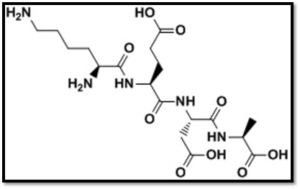
Fonte: Científico
The peptide is supplied as a lyophilized powder. Lyophilization enhances stability and shelf life while preserving purity and molecular structure during storage. No fillers or bulking agents are used in this process.
Biopelabs advises: this material is provided exclusively as a chemical reagent for research purposes. Its use is restricted to in vitro assays and experimental work in a controlled laboratory setting. The information provided is strictly educational and informational. Handling must be performed only by qualified professionals. This product is not classified as a medicine, food, or cosmetic and must not be used, marketed, or described as such.
Livagen is described in the technical literature as a short‑chain peptide bioregulator belonging to the group of organ‑specific cytodrugs, developed from peptide fractions isolated from hepatic tissue. In its most commonly cited formulation, it is a synthetic dipeptide (often described as Lys‑Glu), and its scientific investigation focuses on the functional modulation of hepatocytes and the maintenance of hepatic homeostasis. Available data are predominantly derived from preclinical studies conducted in Eastern European centers, with emphasis on biogerontology, epigenetic regulation, and the physiology of aging. There is a scarcity of large‑scale, widely indexed, randomized clinical trials in international databases.
The proposed mechanism of Livagen is primarily associated with modulation of gene expression in hepatocytes.
Hepatic Transcriptional Regulation
Experimental studies suggest that short‑chain peptides may interact with regulatory regions of DNA, modulating the transcription of genes involved in hepatic protein synthesis, enzymatic metabolism, and detoxification processes.
Indirect Modulation of Hepatic Enzymatic Activity
Observations in experimental models indicate a possible influence on the normalization of hepatic enzyme activity, such as ALT and AST, in contexts of chemically induced liver injury.
Regulation of Apoptosis and Cellular Regeneration
Laboratory data suggest a potential to modulate excessive apoptosis in hepatocytes exposed to oxidative or chemical stress. There is no evidence that Livagen acts as a direct enzyme inhibitor; its effects appear to occur mainly via epigenetic‑type regulation and modulation of intracellular protein synthesis.
The metabolic effects studied so far are centered on hepatic metabolism:
At present, there is no robust, widely validated evidence for significant systemic effects on glucose or lipid metabolism outside the direct hepatic context.
Some exploratory studies involving cytomedic peptides have examined their influence on cellular differentiation and proliferative regulation. However, there is no robust evidence demonstrating specific antitumor activity of Livagen in models of hepatocellular carcinoma or other malignancies.
Available data do not support the conclusion that Livagen exerts direct antiproliferative or cytotoxic effects on tumor cell lines..
The main actions attributed to Livagen involve:
In animal models of toxin‑induced liver injury, histological and biochemical improvements have been observed, associated with preservation of liver structure.
Formal pharmacokinetic data are limited in the published literature. Based on general properties of short‑chain peptides:
The literature does not widely report quantitative parameters such as volume of distribution, clearance, or absolute bioavailability..
Livagen is part of the group of bioregulatory peptides investigated in the context of hepatic aging. It has been studied in association with other cytomedic peptides involved in systemic regulation of gene expression related to cellular senescence. Some works explore its possible relationship with hepatic immunosenescence and chronic oxidative stress.
Livagen is described as a hepatic peptide bioregulator with potential to modulate gene expression in hepatocytes and possibly influence structural and functional hepatic homeostasis. Existing evidence is predominantly preclinical and presents relevant methodological limitations. There is no broad validation through large‑scale, international randomized clinical trials. Therefore, its use remains restricted to the field of scientific research and experimental investigation, particularly in the context of epigenetic regulation and maintenance of hepatic function.
Khavinson, V., & Malinin, V. (2005). Peptide regulation of gene expression and aging. Neuroendocrinology Letters, 26(1), 11–16.
Anisimov, V. N., Khavinson, V. K., & Morozov, V. G. (2002). Cytomedins: role in the regulation of homeostasis and aging. Advances in Gerontology, 9, 83–91.
Khavinson, V., Linkova, N., & Dyatlova, A. (2012). Short peptides regulate gene expression and protein synthesis in human cells. Biochemistry (Moscow), 77(9), 979–987. https://doi.org/10.1134/S0006297912090023
Only logged in customers who have purchased this product may leave a review.
| Weight | 40 g |
|---|---|
| Dimensions | 7 × 3,6 × 8 cm |

Reviews
There are no reviews yet.