
GHRP-2 is a synthetic six-amino-acid peptide, structurally distinct from GHRH analogs, whose biological activity stems from selective activation of the growth hormone secretagogue receptor (GHS-R1a), predominantly expressed in the hypothalamus and anterior pituitary.
Unlike GHRH analogs, GHRP-2 does not act directly on the GHRH receptor but stimulates GH secretion through an alternative pathway dependent on ghrelin-mediated signaling. This activation promotes increased intracellular calcium influx in somatotroph cells, culminating in pulsatile GH release.
The peptide exhibits a short half-life, being rapidly metabolized by plasma peptidases, resulting in transient pharmacodynamic effects. Its mechanism of action depends on the functional integrity of the hypothalamus-pituitary axis, neither replacing endogenous secretion nor acting as an exogenous hormone.
Important Information
| Properties | Value |
| Molecular Formula | C₄₅H₅₅N₉O₆ |
| Molecular Weight | ≈ 817.9 g/mol |
| Synonyms | GHRP-2, Growth Hormone Releasing Peptide-2, Pralmorelin, KP-102, Hexapeptide GHS |
Main Structure of the GHRP-2 Peptide
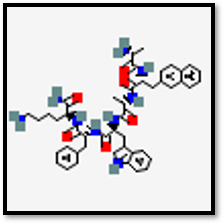
Source: PubChem
Comparative Summary – GHRP-2 vs. GHRP-6 (Synthesized Version)
GHRP-2 and GHRP-6 are hexapeptide growth hormone secretagogues that act as agonists of the ghrelin receptor (GHS-R1a), stimulating endogenous pulsatile GH release through pathways independent of the GHRH receptor. Both exhibit short half-lives and depend on the functional integrity of the hypothalamus-pituitary axis.
The main differences lie in their functional profiles: GHRP-2 shows greater selectivity for GH secretion stimulation, while GHRP-6 demonstrates stronger activation of hypothalamic orexigenic pathways associated with appetite control, stemming from subtle differences in their peptide structures.
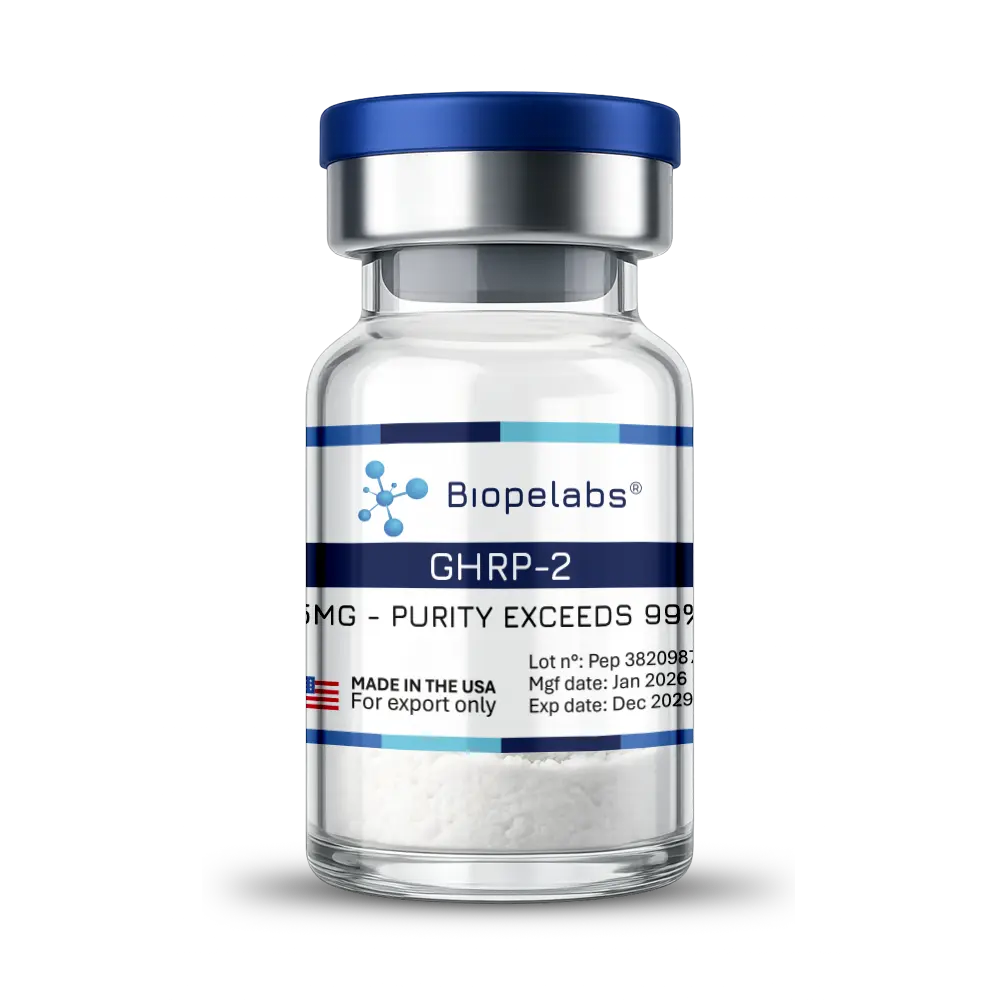
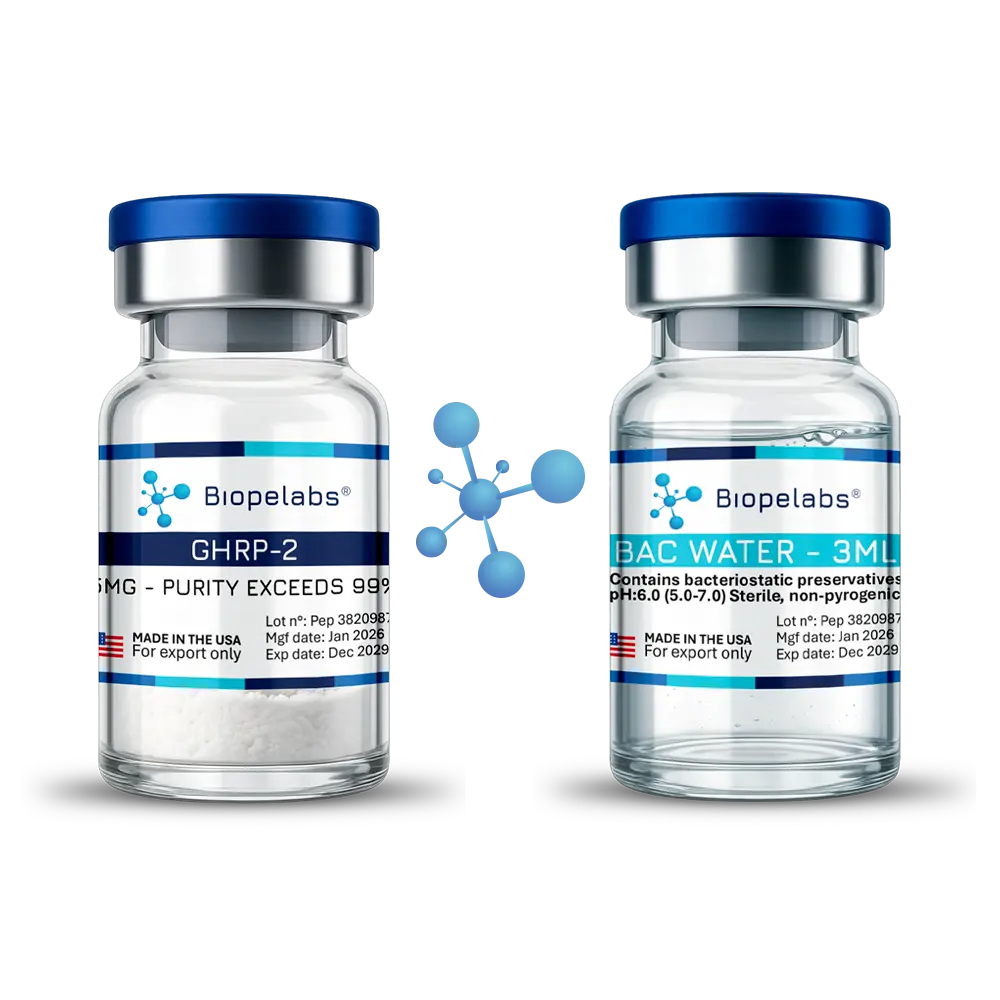
Lyophilized Peptides
The peptides undergo a lyophilization process, a technique that enhances stability and shelf life while preserving purity and molecular structure during storage. Notably, no fillers are used in this procedure.
Intended Use
Biopelabs warns: this material is provided exclusively as a chemical reagent for research purposes. Its use is restricted to in vitro assays and experimental activities in a laboratory setting. The information provided is strictly informational and educational. Handling must be performed only by qualified professionals. The product is not classified as a medicine, food, or cosmetic and must not be used, marketed, or described as such.
Scientific Research on GHRP-2 (Growth Hormone Releasing Peptide-2)
GHRP-2 (Growth Hormone Releasing Peptide-2), also known as pralmorelin, is a synthetic hexapeptide belonging to the class of growth hormone secretagogues (GHS). Developed as an agonist of the ghrelin receptor (GHS-R1a), it has the capacity to stimulate endogenous growth hormone (GH) secretion.
Structurally composed of six synthetic amino acids, it exhibits high secretagogue potency when administered parenterally. Unlike GHRH (Growth Hormone Releasing Hormone), GHRP-2 acts through a mechanism independent of the classical hypothalamic GHRH pathway, although synergy exists between both pathways.
GHRP-2 acts as an agonist of the GHS-R1a receptor (Growth Hormone Secretagogue Receptor type 1a), a G protein-coupled receptor (GPCR) primarily expressed in:
Molecular mechanism:
Additionally, GHRP-2 may:
It does not act as an enzymatic inhibitor; its effect is predominantly receptor-dependent agonist.
GHRP-2 administration results in acute GH increases and subsequent IGF-1 elevation (depending on exposure duration).
Metabolic effects observed in experimental studies include:
Protein metabolism
Lipid metabolism
Carbohydrate metabolism
Also described:
Metabolic effects are dose-, frequency-, and baseline somatotrophic axis-dependent.
GH/IGF-1 axis activation raises interest in oncology due to IGF-1-associated proliferative potential.
Experimental models indicate chronic GH axis stimulation may:
However, there is no consolidated evidence of GHRP-2 investigation as an antitumor agent. Its oncological interest relates primarily to safety and implications of sustained IGF-1 increases.
GHRP-2 exhibits:
Its biological effect is pulsatile, partially mimicking physiological GH secretion when administered intermittently.
Response may diminish with continuous administration due to receptor desensitization.
GHRP-2 is a synthetic hexapeptide GH secretagogue acting through GHS-R1a receptor activation, stimulating endogenous growth hormone release. Its mechanism differs from GHRH, enabling pharmacological synergy.
In research context, it is relevant for somatotrophic axis investigation, energy metabolism, and neuroendocrine regulation. However, prolonged GH/IGF-1 axis activation requires cautious analysis regarding potential systemic proliferative implications.
Pralmorelin; 158861-67-7; GHRP-2; KP-102; Pralmorelina; ...
CID compound: 6918245
MF: C45H55N9O6
MW: 818.0 g/mol
IUPAC name: (2S)-6-amino-2-[[(2R)-2-[[(2S)-2-[[(2S)-2-[[(2R)-2-[[(2R)-2-aminopropanoyl]amino]-3-naphthalen-2-ylpropanoyl]amino]propanoyl]amino]-3-(1H-indol-3-yl)propanoyl]amino]-3-phenylpropanoyl]amino]hexanamide
SMILES: CC@HN
InChIKey: HRNLPPBUBKMZMT-RDRUQFPZSA-N
Creation date: 2006-07-28 - PubChem
Bowers, C. Y., Momany, F. A., Reynolds, G. A., & Hong, A. (1984). On the in vitro and in vivo activity of a new synthetic hexapeptide that acts on the pituitary to specifically release growth hormone. Endocrinology, 114(5), 1537–1545. https://doi.org/10.1210/endo-114-5-1537
Smith, R. G., Van der Ploeg, L. H., Howard, A. D., et al. (1997). Peptidomimetic regulation of growth hormone secretion. Endocrine Reviews, 18(5), 621–645. https://doi.org/10.1210/edrv.18.5.0312
Kojima, M., Hosoda, H., Date, Y., et al. (1999). Ghrelin is a growth-hormone-releasing acylated peptide from stomach. Nature, 402(6762), 656–660. https://doi.org/10.1038/45230
Liu, J., Prudom, C. E., Nass, R., et al. (2007). Novel ghrelin assays provide evidence for independent regulation of ghrelin acylation and secretion in healthy young men. Journal of Clinical Endocrinology & Metabolism, 92(5), 1980–1987. https://doi.org/10.1210/jc.2006-1597
Scientific Reviewer
Content reviewed by Dr. Ky H. Le, MD. Dr. Ky H. Le is a family physician in Aiea, Hawaii. He received his medical degree from St. George's University School of Medicine and has been practicing for over 20 years. He has expertise in treating obesity, diabetes, hypertension, and high blood pressure, among other conditions—see all areas of specialization. Dr. Ky H. Le accepts Medicare, Aetna, Humana, Blue Cross, United Healthcare.
Ref.: https://health.usnews.com/doctors/ky-le-371599#expertise
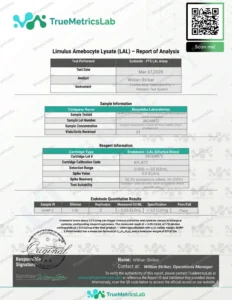
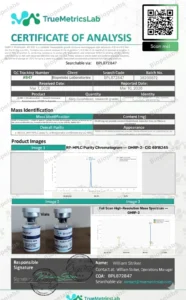
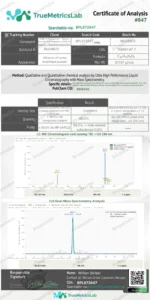
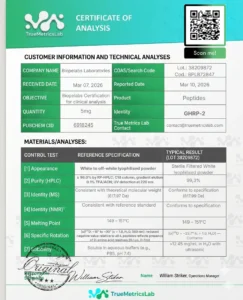
Only logged in customers who have purchased this product may leave a review.
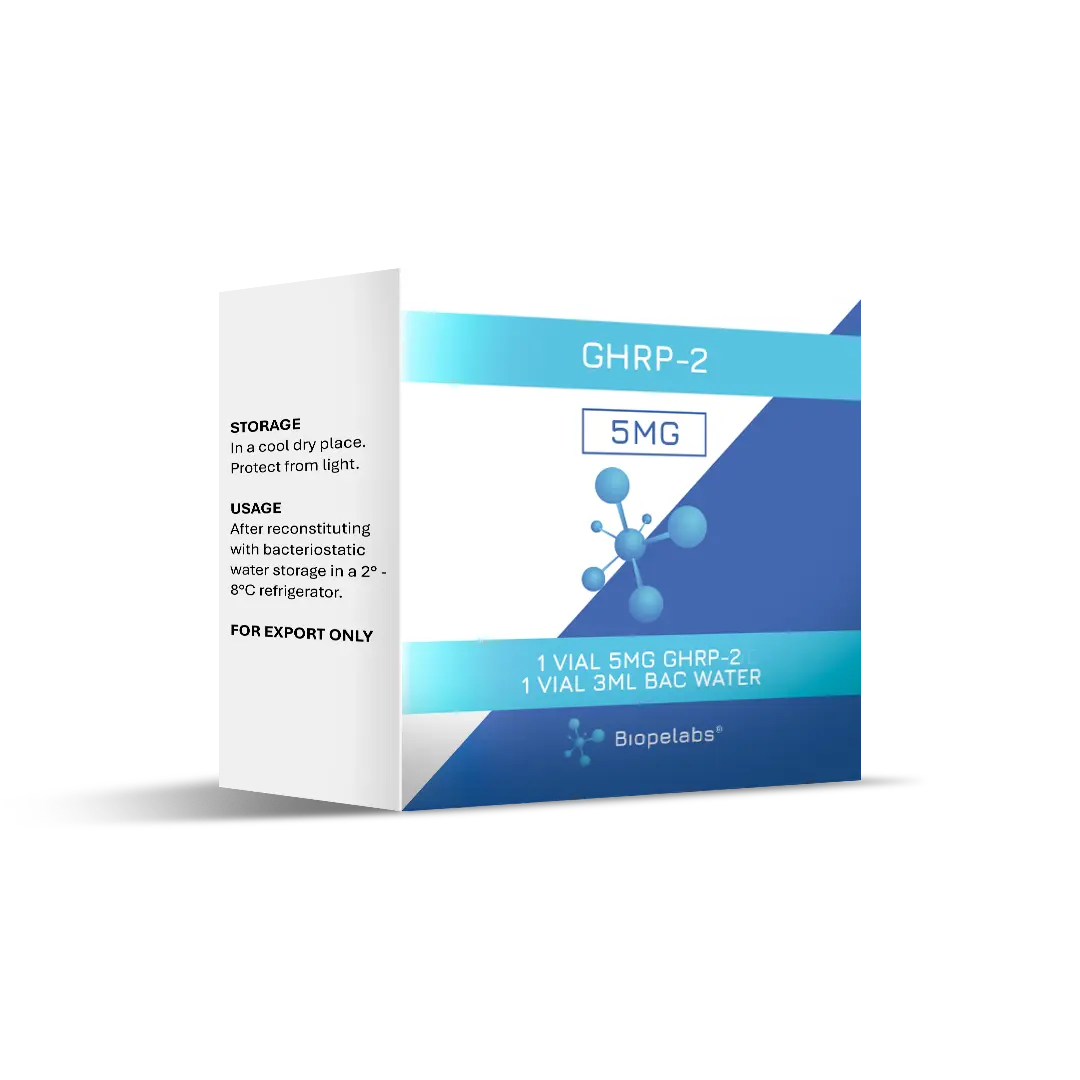
| Weight | 40 g |
|---|---|
| Dimensions | 7 × 3,6 × 8 cm |



Reviews
There are no reviews yet.