
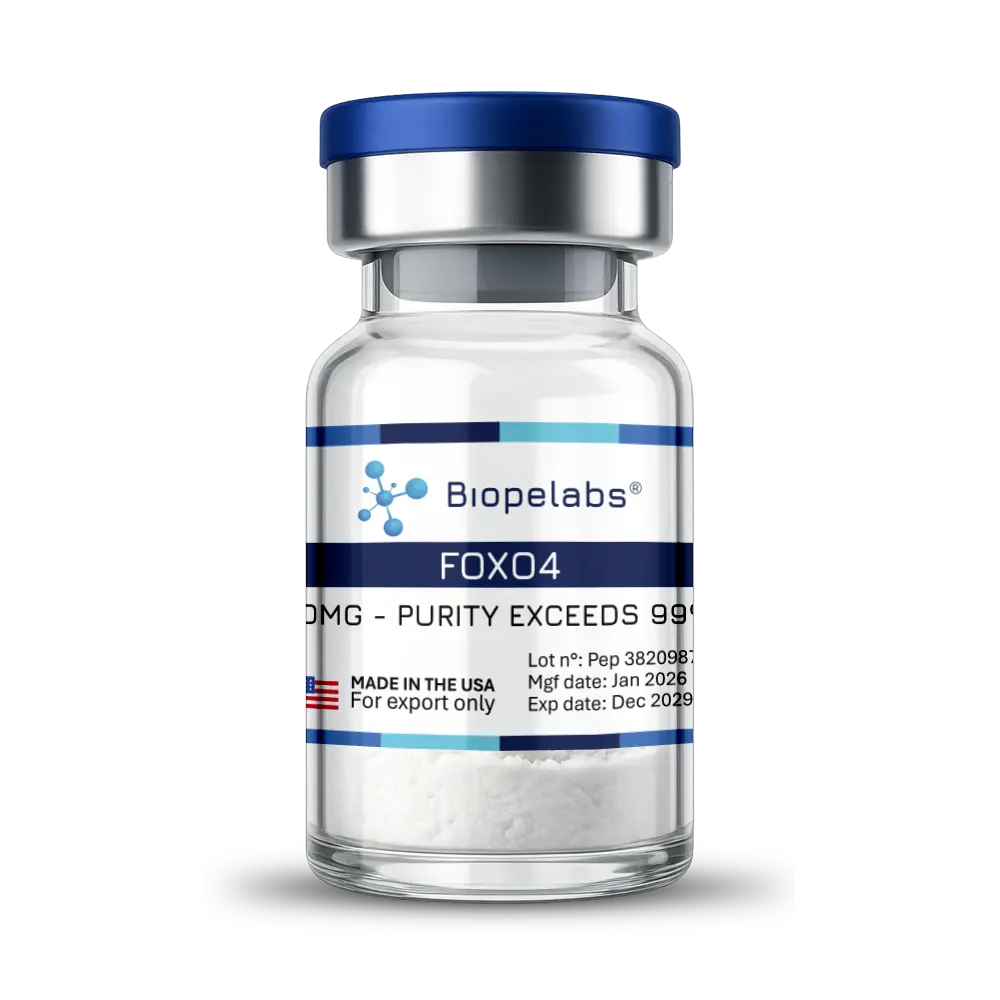
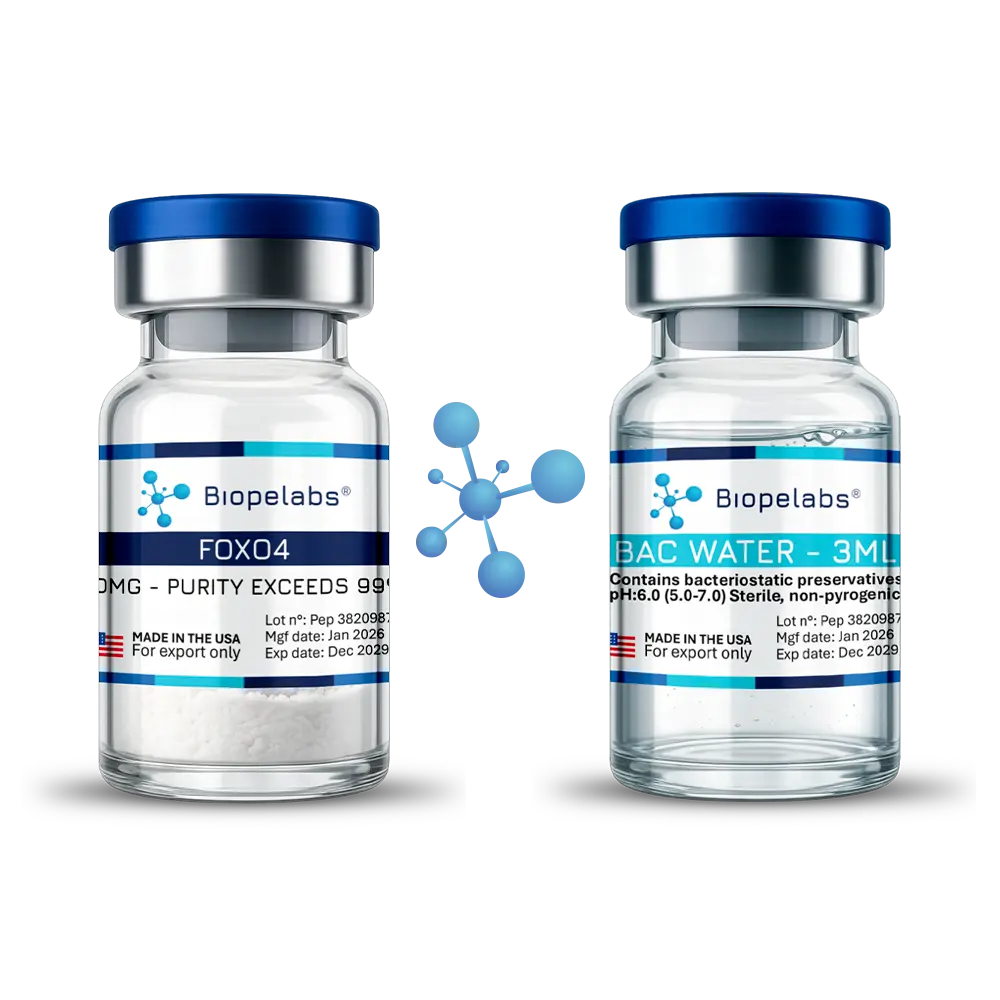
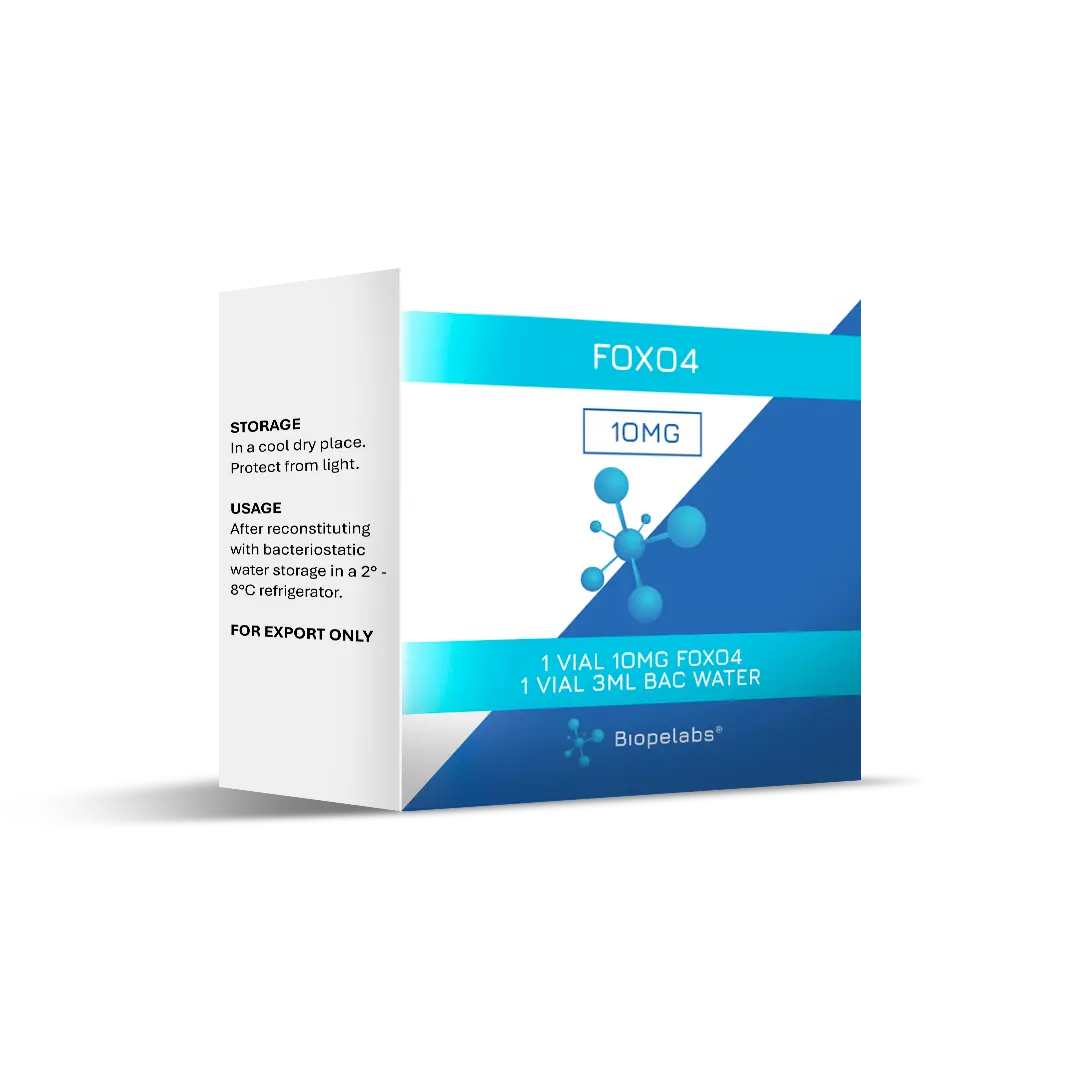


FOXO4 is part of the FOXO subfamily of transcription factors, characterized by a conserved Forkhead (winged‑helix) domain that mediates specific DNA binding. Its activity is regulated by post‑translational modifications such as phosphorylation, acetylation, and ubiquitination, often mediated by signaling pathways including PI3K/AKT.
When localized to the nucleus, FOXO4 promotes or represses the expression of genes associated with cell‑cycle arrest, DNA repair, oxidative‑stress resistance, and apoptosis. Its functional interaction with proteins such as p53 has been studied in the context of cellular senescence and aging.
Human FOXO4 comprises approximately 505 amino acids and displays variable tissue distribution, with detectable expression in multiple cell types, particularly in tissues involved in metabolic and vascular regulation.
Important Information
| Property | Value |
| Molecular formula | Not uniquely defined (FOXO4 is a large protein; its molecular formula depends on the isoform and post‑translational state) |
| Molecular weight | 54–56 kDa (≈54,000–56,000 Da), depending on isoform and post‑translational processing |
| Synonyms | Forkhead Box Protein O4, FOXO4 Transcription Factor, AFX (AF6q21 protein), Forkhead homolog in rhabdomyosarcoma‑like 1 (FKHRL1‑related historical designation in the literature) |
Main structure of the FOXO4 protein
Source: Científico
Lyophilized Peptides
Peptides undergo a lyophilization process, a technique that contributes to greater stability and extended shelf life, while preserving purity and molecular structure during storage. It is important to note that no fillers are used during this procedure.
Intended Use
Biopelabs states: this material is provided exclusively as a chemical input for research purposes. Its use is restricted to in vitro assays and experimental activities in laboratory environments. The information presented is strictly for informational and educational purposes. Handling must be carried out only by properly qualified professionals. This product is not classified as a medication, food, or cosmetic, and must not be used, marketed, or described as such.
FOXO4‑DRI is a synthetic D‑retro‑inverso senolytic peptide designed to mimic the interaction domain of FOXO4 with p53, selectively eliminating senescent cells. Its sequence is H‑FOKDRIASEIAQSILEAYSQNGWANRRSGGrr‑OH (D‑amino acids, retro‑inverso motif LTLRKEPASEIAQSILEAYSQNGWANRRS), followed by a 9‑residue poly‑arginine cell‑penetrating tail, with a molecular mass of approximately 5358 Da. Developed for aging‑related research, FOXO4‑DRI acts as a disruptor of the FOXO4–p53 interaction in senescent cells, where both FOXO4 and p53 are overexpressed.
FOXO4‑DRI enters cells via the poly‑arginine sequence, binds with high affinity to the disordered transactivation domain 2 (TAD2) of p53, and competes with endogenous FOXO4, thereby displacing FOXO4 and promoting nuclear exclusion of phosphorylated p53 (Ser15). This leads to activation of BAX and caspase‑3, triggering selective apoptosis in senescent cells without affecting healthy cells.
No direct inhibitor of FOXO4‑DRI is currently described; its action is senolytic “agonist‑like” via protein‑interaction blockade, with selectivity conferred by the p53‑Ser15 phosphorylation‑dependent binding mode. Co‑immunoprecipitation (CO‑IP) studies confirm disruption of FOXO4–p53 complexes and a reduction in the senescence‑associated secretory phenotype (SASP).
In models of bleomycin‑induced pulmonary fibrosis, FOXO4‑DRI eliminates senescent myofibroblasts, reduces inflammatory SASP, downregulates ECM proteins (collagen, fibronectin), inhibits ECM‑receptor interactions, and improves lung function and associated metabolic parameters.
In diabetes‑ and fibrosis‑related models, the peptide increases the proportion of alveolar type‑2 epithelial cells and normal fibroblasts while reducing myofibroblasts, suggesting modulation of TGF‑β and metabolic‑inflammation pathways. In age‑related hypogonadism, FOXO4‑DRI ablates senescent Leydig cells, restoring testosterone and androgenic metabolism in aged mice.
In non‑small‑cell lung cancer (NSCLC; H460/A549 lines), FOXO4‑DRI inhibits proliferation, migration, and colony formation, enhances radiosensitivity through senescence‑associated apoptosis, and induces cell‑cycle arrest.
In keloid‑like aggressive tumor models, the peptide induces apoptosis in pro‑inflammatory, mesenchymal‑type senescent fibroblasts via p53‑Ser15–dependent signaling, reducing recurrence and the senescent‑inflammatory microenvironment. Genomic studies highlight its potential in tumors with therapy‑induced senescence, where it may help prevent chemotherapy‑induced toxicity and relapse.
As a D‑retro‑inverso peptide, FOXO4‑DRI exhibits high proteolytic stability and resistance to enzymatic degradation, coupled with efficient cellular uptake via its poly‑arginine tail. It can be administered systemically (intraperitoneal or intravenous) in murine models, with assumed hepatic/renal clearance similar to other peptides.
A precise half‑life has not been fully quantified in recent literature, but repeated‑dose studies show sustained efficacy without acute hepatorenal toxicity (normal CCK‑8), and extended‑dosing regimens restore function in accelerated‑aging models. The D‑configuration optimizes bioavailability for long‑term preclinical studies.
FOXO4‑DRI stands out as a selective senolytic agent for anti‑aging, fibrotic, and selected cancer‑related research, leveraging p53‑dependent selectivity to minimize off‑target effects. Current work focuses on pharmacokinetic optimization and the translation of these findings into clinical trials for age‑related and fibro‑inflammatory diseases.
The content was reviewed by Dr. Ky H. Le, MD. Dr. Ky H. Le is a family physician in Aiea, Hawaii. He received his medical degree from St. George’s University School of Medicine and has practiced for over 20 years. He has expertise in the treatment of obesity, diabetes, hypertension, and high blood pressure, among other conditions. Dr. Ky H. Le accepts Medicare, Aetna, Humana, Blue Cross, and United Healthcare.
Ref.: https://health.usnews.com/doctors/ky-le-371599#expertise
Only logged in customers who have purchased this product may leave a review.
| Weight | 40 g |
|---|---|
| Dimensions | 7 × 3,6 × 8 cm |

Reviews
There are no reviews yet.